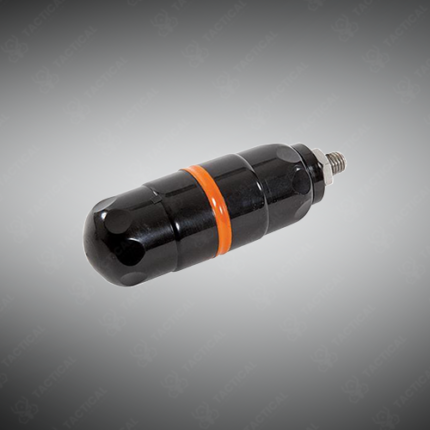
Sewer Sonde
A sewer sonde is a compact transmitter. It traces the exact path of a buried sewer or drain line from the surface. It fits inside a push-rod camera head, or attaches separately near the camera. The sonde sends a signal upward, and a handheld locator picks it up while an operator walks the surface route above. The housing is sealed and waterproof. This lets the sonde work fully submerged during inspection runs through standing water or active flow, a common condition inside working sewer lines.
Diameter stays under 25mm on most models. This size fits through residential drain connections and standard sewer lateral pipes without getting stuck. Frequency output typically runs at 512Hz or 33kHz. Lower frequencies suit deeper burial or dense soil. Higher frequencies work well for shallow lines in typical dry ground. Detection range from the surface reaches 3 to 5 metres in most soil conditions.
Power comes either from a small internal battery or directly through the push-rod cable connected to the camera system. The battery option lasts several hours per charge. The cable-powered option removes the need for separate battery management during long inspection jobs. Build quality favors a rugged polymer shell. This resists abrasion from rough interior pipe walls, grit, and debris common in older drain lines.
Plumbing contractors use sewer sondes paired with push-rod cameras to trace blocked or cracked lines before choosing a repair approach. Municipal utility crews use them to confirm sewer routes missing from outdated site plans. Construction teams also rely on sondes to mark drain paths before starting nearby digging work.
Tactical Supply Pakistan supplies sewer sondes to plumbing contractors, municipal utility crews, and construction survey teams across Pakistan. Sonde size and frequency output are matched to expected pipe diameter and burial depth.
Showing the single result