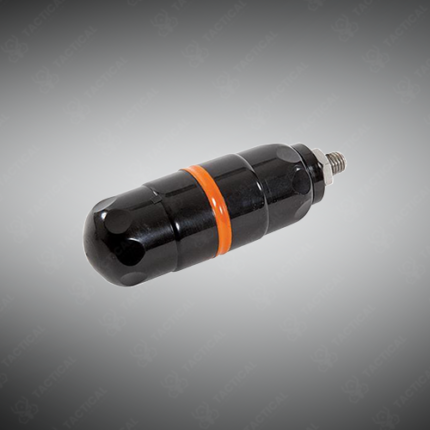
Sewer Pipe Drain Inspection Sonde
A sewer pipe drain inspection sonde is a small transmitter that travels through a drain line, either built into a push-rod camera head or fed in separately, sending a signal that a surface locator can trace from ground level. The sonde sits inside a sealed, waterproof housing, letting it operate fully submerged in standing water or active flow without damage to the internal transmitter circuit. Diameter stays small, usually under 25mm, so the sonde fits through drain lines and connections as narrow as residential plumbing allows.
Frequency output typically runs at 512Hz or 33kHz, chosen based on expected burial depth and soil type. Lower frequencies travel further through dense or wet soil, while higher frequencies work well in typical dry ground conditions at shallow depth. Detection range from the surface reaches 3 to 5 metres in most cases, enough to trace a standard residential or municipal drain line without needing to dig test holes first.
Battery life inside the sonde varies by model, with some units running for several hours on a small internal cell and others drawing power through the push-rod cable itself, avoiding the need for a separate battery entirely. Housing material is usually a rugged polymer, resistant to abrasion from rough pipe interiors or gravel debris commonly found inside older drain lines.
Plumbing contractors use inspection sondes paired with a push-rod camera to trace blocked or damaged drain lines before deciding on repair method. Municipal utility crews use them to confirm sewer line routes missing from older site records. Construction survey teams also rely on sondes to mark drain paths accurately before nearby excavation work begins.
Tactical Supply Pakistan supplies sewer pipe drain inspection sondes to plumbing contractors, municipal utility crews, and construction survey teams across Pakistan. Sonde size and frequency are matched to expected pipe diameter and burial depth.
Showing the single result