Raman Spectrometers
Raman spectrometers identify chemical compounds through laser-induced molecular scatter analysis, producing spectral fingerprints that match against reference libraries to confirm compound identity without sample preparation, physical contact, or destructive testing. Security agencies, forensic laboratories, pharmaceutical quality control teams, and industrial inspection programs across Pakistan use Raman spectrometers across a range of instrument formats suited to different application environments and performance requirements.
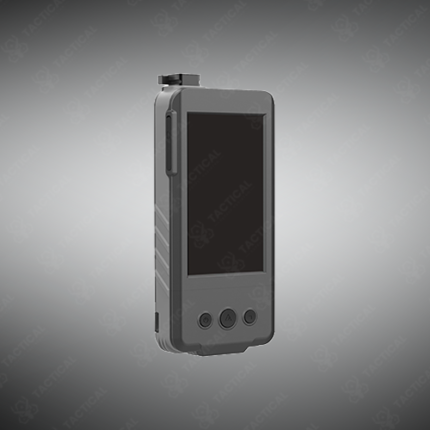
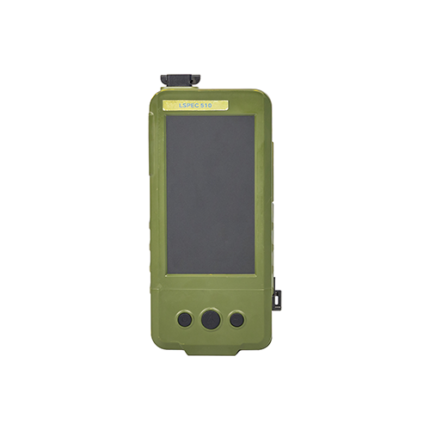
Handheld portable models weigh between 1 and 2.5 kilograms. They use 785nm or 1064nm laser excitation with onboard libraries covering explosives, narcotics, chemical threat agents, and pharmaceutical compounds. Field operators get identification results within 15 to 45 seconds of sample contact or standoff measurement. Benchtop laboratory instruments use larger detector arrays and higher-groove-density gratings, achieving spectral resolution between 0.5 and 2 wavenumbers per centimeter compared to 8 to 15 wavenumbers on portable units. Additionally, this resolution improvement allows benchtop systems to discriminate between polymorphic drug forms, isotopic variants, and closely spaced vibrational modes that overlap on lower-resolution portable instruments.
Excitation laser options across the Raman spectrometer range include 532nm green, 633nm red, 785nm near-infrared, and 1064nm near-infrared wavelengths. The 785nm wavelength suits most security and forensic applications by balancing Raman signal intensity against fluorescence background from organic samples. The 1064nm wavelength handles highly fluorescent samples including colored narcotics, spices, and biological materials where 785nm excitation still produces unacceptable background interference. Furthermore, through-container measurement capability allows identification of substances inside sealed glass and plastic packaging up to 5mm wall thickness without opening the container during security screening or customs inspection operations.
Microscope-coupled Raman systems add spatial chemical mapping capability, collecting spectra at each pixel position across a defined sample area and generating false-color compound distribution maps. Moreover, surface-enhanced Raman spectroscopy configurations using noble metal nanoparticle substrates amplify signal from trace analytes at sub-parts-per-million concentration levels, extending detection capability for forensic trace evidence analysis beyond standard bulk measurement sensitivity.
Tactical Supply Pakistan supplies Raman spectrometers to forensic science laboratories, border security agencies, anti-narcotics forces, pharmaceutical manufacturers, and industrial quality control programs requiring chemical compound identification capability across field and laboratory analytical applications throughout Pakistan.
Showing the single result