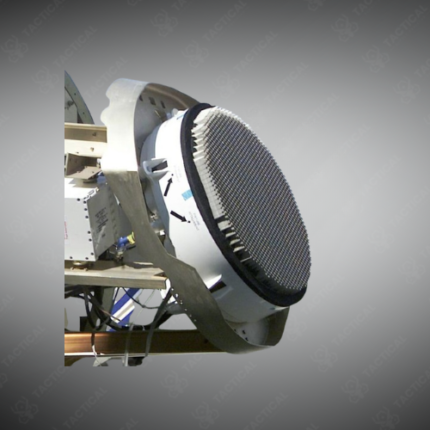
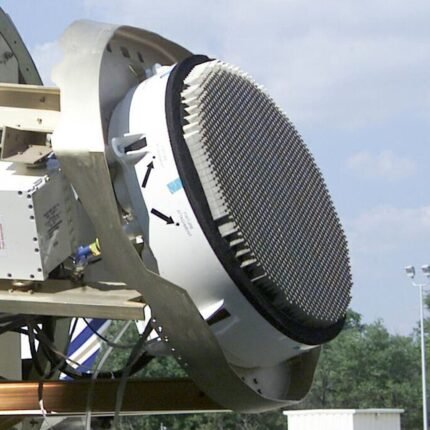
Millimeter Wave (mmWave) Radar
Millimeter Wave (mmWave) Radar operates at extremely high frequencies, typically between 30 and 300 gigahertz, using correspondingly short wavelengths to achieve detection resolution and accuracy that lower-frequency radar systems cannot match within a similarly compact sensor package. Automotive safety engineers and security system integrators select mmWave radar because the technology delivers centimeter-level range resolution and precise velocity measurement while maintaining a small enough antenna size for integration into space-constrained applications. Therefore, the combination of high resolution and compact form factor drives mmWave adoption across applications where both performance and size matter equally.
Common automotive and security mmWave radar implementations operate at 24GHz, 60GHz, or 77GHz frequency bands, with 77GHz increasingly favored for its superior range resolution and smaller required antenna dimensions compared to 24GHz alternatives offering equivalent detection range. Furthermore, the short wavelength at these frequencies, measured in millimeters rather than centimeters, allows the radar to resolve fine details including individual fingers in gesture recognition applications or precise breathing and heartbeat detection in human presence sensing systems.
Frequency-modulated continuous wave (FMCW) waveform processing extracts both range and velocity data simultaneously from the reflected signal, with range resolution reaching below 5 centimeters on advanced 77GHz systems. Consequently, this fine resolution distinguishes mmWave radar from conventional microwave radar systems that typically resolve targets only to meter-level precision.
Multiple-input multiple-output (MIMO) antenna configurations using several transmit and receive elements enable angular resolution sufficient to distinguish closely spaced targets and determine precise bearing angle to detected objects. Additionally, mmWave radar maintains reliable performance through rain, fog, dust, and complete darkness, conditions that significantly degrade optical and infrared sensing alternatives.
Penetration capability through certain non-metallic materials including drywall, clothing, and plastic enclosures extends mmWave radar applications into through-wall human detection and concealed object screening uses that other sensor types cannot address.
In Pakistan, millimeter wave radar serves automotive advanced driver assistance systems, perimeter security installations, human presence detection systems, and security screening applications. Tactical Supply Pakistan supplies Millimeter Wave Radar systems for automotive, security, and detection procurement across Pakistan.
Showing the single result