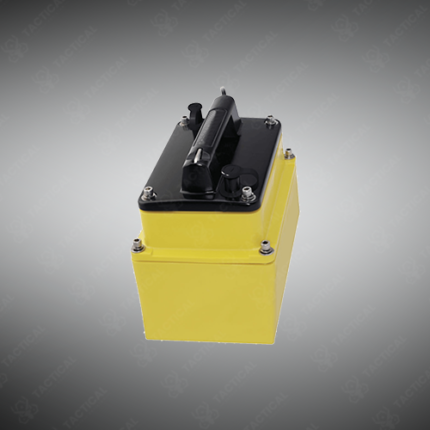
Chirp Transducers
Chirp transducers are ultrasonic sensing elements employing frequency-modulated (chirp) excitation signals rather than single-frequency pulses, enabling superior target discrimination and range resolution through frequency-sweep analysis. The chirp approach enables improved signal-to-noise ratio and penetration depth compared to conventional narrow-band ultrasonic transducers.
Premium chirp transducers employ piezoelectric ceramic elements excited by frequency-swept waveforms — typically spanning 50kHz to 500kHz over 10–100 microsecond duration — with returned echoes analysed through matched filtering revealing target range and composition through time-frequency analysis. Frequency diversity reduces clutter from side-lobes and multiple reflections common with single-frequency transmission.
Applications include medical ultrasound imaging where chirp excitation improves contrast resolution enabling detection of small lesions, non-destructive material testing where frequency sweep characterisation distinguishes defect types through spectral signatures, and underwater sonar where chirp compression improves range resolution in noise-limited ocean environments. Velocity compensation algorithms account for medium sound velocity variations improving accuracy across temperature or salinity changes.
Transducer design employs precise impedance matching minimising reflections at medium boundaries maximising acoustic energy transmission. Backing materials employ damped composites reducing transducer ringing that would obscure early echoes from near-surface targets.
In Pakistan, chirp ultrasonic transducers support medical imaging facilities and non-destructive testing across industrial applications.
Tactical Supply Pakistan supplies chirp transducer systems for medical and industrial ultrasonic applications.
Showing the single result