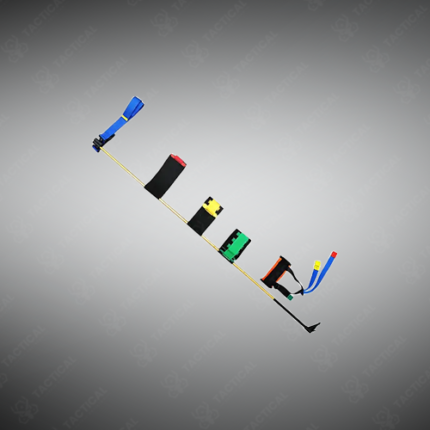
Aluminum Alloy Leg Traction Splint
An aluminium alloy leg traction splint is a field-expedient fracture stabilisation device designed to immobilise and apply longitudinal traction to lower limb fractures — primarily femoral shaft fractures — reducing pain, controlling bleeding from bone fragments, and preventing vascular or neurological compromise during patient evacuation to surgical care.
The splint frame is constructed from lightweight aluminium alloy tubing with corrosion-resistant anodised finish, typically featuring a proximal ischial pad that seats against the patient’s buttock to anchor the device, parallel rails running along the medial and lateral leg surfaces, and a distal foot rest with integrated ankle hitch system. Total device weight is typically between 1.2kg and 2.0kg, allowing easy transport and application by a single medic in field conditions.
Traction is applied through a mechanical advantage system — either a ratchet mechanism or Spanish windlass using a webbing strap — that pulls the patient’s foot downward relative to the hip anchor point, maintaining longitudinal tension along the fractured femur. Applied traction force typically ranges between 7kg and 12kg, sufficient to reduce fragment override and relieve muscle tension without generating excessive force that risks neurovascular compromise.
Securing straps use Velcro or quick-release buckles to hold the leg against the rails at the knee, thigh, and ankle, with padding on contact points to distribute pressure and prevent soft tissue injury during prolonged immobilisation.
In Pakistan, aluminium alloy leg traction splints equip military medical units, counter-terrorism tactical medic kits, civilian emergency medical services, and remote area trauma response teams operating where definitive orthopaedic care requires extended transport times.
Tactical Supply Pakistan supplies aluminium alloy leg traction splints for professional tactical medical and emergency response applications.
Showing the single result