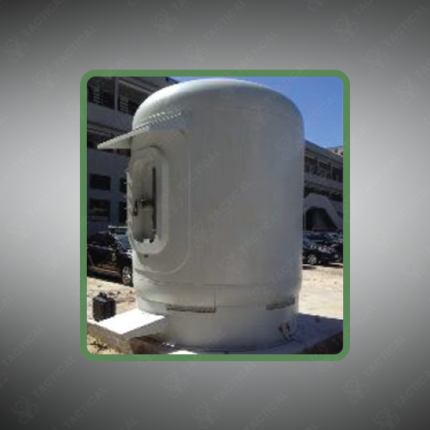
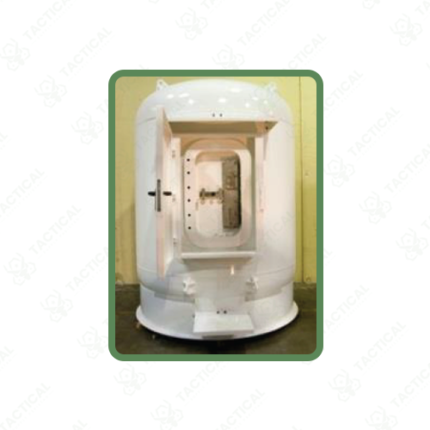
Total Containment Vessel
A total containment vessel holds and contains an explosive charge or suspicious device during controlled detonation or disruption, preventing blast fragments, pressure, and debris from escaping into the surrounding area. The vessel body is usually forged steel, built as a thick-walled cylinder or sphere rated to withstand repeated detonations of a specified explosive weight without cracking or losing containment integrity. Capacity ratings typically range from 1kg TNT-equivalent for smaller portable units up to 9kg or more for larger fixed installation vessels used at dedicated disposal ranges.
Wall thickness scales with rated capacity, commonly running from 40mm on smaller units up to 150mm or more on high-capacity vessels, since thicker steel absorbs greater blast energy without deformation. Interior lining sometimes includes a sacrificial layer, absorbing initial fragmentation impact and reducing wear on the main structural wall across repeated uses.
Mobile versions mount on a trailer or vehicle chassis, letting bomb disposal units transport the vessel to a scene rather than requiring the suspicious item to travel to a fixed facility. Fixed installation vessels stay permanently mounted at training ranges or disposal facilities handling routine explosive destruction work. Some vessels include external cooling fins or venting systems, managing heat buildup from repeated use during a single operational day.
Bomb disposal units use total containment vessels to safely detonate suspicious packages or devices without exposing surrounding structures or personnel to blast effects. Military EOD teams use mobile versions during field operations away from a fixed disposal facility.
Tactical Supply Pakistan supplies total containment vessels to bomb disposal units, military EOD teams, and police explosives units across Pakistan. Capacity rating and mobility configuration are matched to each unit’s operational requirements.
Showing the single result