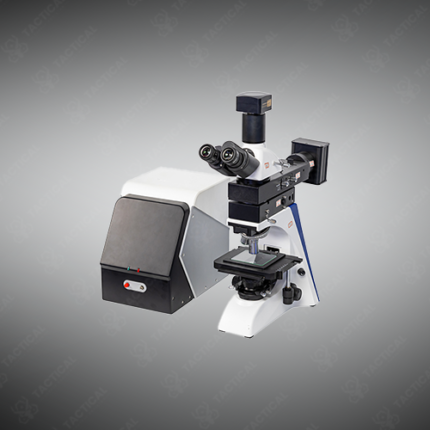
Raman Spectroscopy
Raman spectroscopy is a laser-based analytical technique that identifies chemical compounds by measuring the inelastic scatter of photons from molecular bonds, producing a spectral fingerprint unique to each compound’s molecular structure. Forensic investigators, pharmaceutical analysts, security inspection teams, industrial quality control departments, and research scientists across Pakistan use Raman spectroscopy across a wide range of identification, verification, and characterization tasks where non-destructive, rapid chemical analysis adds operational or analytical value.
The measurement process directs a monochromatic laser beam onto the target sample. Most incident photons scatter elastically at the same frequency as the excitation laser. A small fraction scatter inelastically, shifting in frequency by amounts determined by the vibrational modes of the specific molecular bonds present in the sample. A spectrometer collects this frequency-shifted scatter and converts it into a spectrum displaying intensity against wavenumber shift. Each compound produces a unique combination of peak positions and relative intensities across this spectrum. Additionally, the technique works through glass and plastic container walls, allowing identification of sealed package contents without opening the container during security screening and customs inspection operations at Pakistani border checkpoints and postal facilities.
Key application areas cover explosive and narcotics identification at security checkpoints, pharmaceutical raw material verification and counterfeit drug detection, food adulterant screening in spices and dairy products, polymer identification in materials quality control, and forensic evidence analysis at crime scene and laboratory stages. Furthermore, portable Raman instruments bring these identification capabilities to field locations including border posts, crime scenes, and industrial sites, while laboratory instruments deliver higher spectral resolution for research and regulatory-grade analysis tasks requiring finer compound discrimination.
Limitations include difficulty measuring samples with strong fluorescence background, dark or black samples that absorb the laser and generate heat rather than scatter, and aqueous solutions where water produces a broad background that overlaps weaker analyte Raman peaks. Moreover, surface-enhanced Raman spectroscopy using noble metal nanoparticle substrates addresses trace concentration limitations by amplifying signal from analytes adsorbed onto the substrate surface, extending detection capability to parts-per-billion levels for forensic trace evidence work.
Tactical Supply Pakistan supplies Raman spectroscopy instruments, accessories, and consumables to forensic laboratories, pharmaceutical quality control departments, border security inspection programs, and analytical research institutions requiring chemical identification capability across field and laboratory applications throughout Pakistan.
Showing the single result