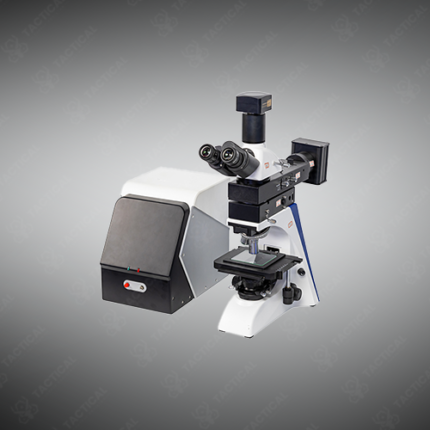
Raman Imaging and Spectrometers
Raman imaging and spectrometers combine laser excitation spectroscopy with spatial mapping capability, producing both compound identification data and two-dimensional chemical distribution maps of sample surfaces. These instruments serve forensic laboratories, pharmaceutical quality control departments, materials research facilities, and security inspection programs requiring not just identification of what a compound is, but where specific chemical species are distributed across a sample surface or cross-section.
Point spectrometer configurations focus a laser beam onto a single spot on the sample, collecting the Raman scatter spectrum from that specific location within 5 to 30 seconds of acquisition. Excitation wavelengths include 532nm green, 633nm red, 785nm near-infrared, and 1064nm near-infrared, with wavelength selection based on sample fluorescence sensitivity and required spectral range coverage. Spectral resolution on laboratory Raman spectrometers runs between 1 and 4 wavenumbers per centimeter, sufficient for confident discrimination between closely related chemical compounds including polymorphic drug forms and isomeric explosive precursors. Additionally, confocal Raman configurations use a pinhole aperture in the collection path to reject out-of-focus scatter, providing depth-resolved spectra from specific layers within a sample without physical sectioning.
Raman imaging maps chemical composition across a defined sample area by collecting a full spectrum at each pixel position in a raster scan pattern. Pixel spacing runs between 0.5 and 10 micrometers depending on objective lens magnification and sample feature size. Scan areas cover between 50 x 50 micrometers for high-resolution pharmaceutical crystal mapping and 10 x 10 millimeters for larger area forensic sample surveys. Furthermore, false-color chemical maps generated from the spectral dataset display the spatial distribution of each identified compound component across the mapped area, revealing mixing uniformity, contamination patterns, and layered material structures invisible to standard optical microscopy.
Onboard spectral libraries cover pharmaceutical compounds, polymers, explosives, narcotics, and industrial chemicals. Automated library matching identifies unknown compounds and maps their distribution across imaged sample areas. Moreover, integration with optical microscopes allows simultaneous brightfield and Raman chemical imaging of the same sample field, correlating visual morphology with chemical composition data at the same spatial scale.
Tactical Supply Pakistan supplies Raman imaging systems and spectrometers to forensic science laboratories, pharmaceutical quality control facilities, materials research institutions, and security technology development programs requiring combined chemical identification and spatial mapping capability across analytical and inspection applications throughout Pakistan.
Showing the single result