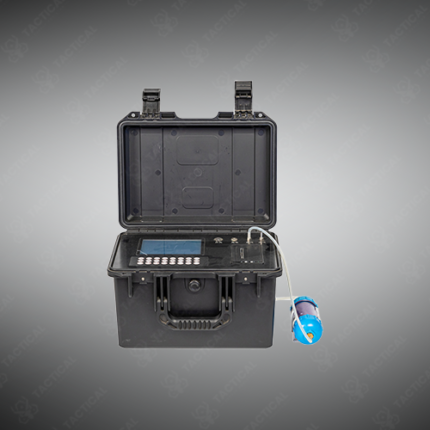
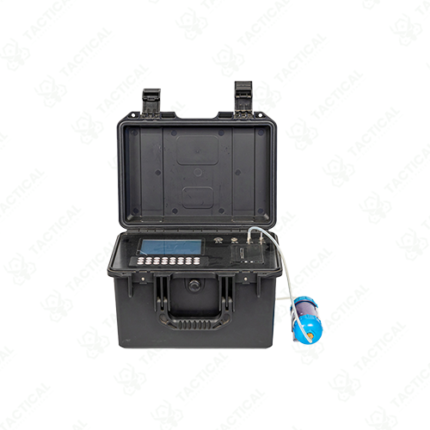
Radon Meter
Radon meters and radon detectors measure the concentration of radon-222 gas in indoor air, providing quantitative data that building owners, safety inspectors, and public health officers use to assess long-term inhalation exposure risk from this naturally occurring radioactive gas. Radon enters buildings through foundation cracks, service pipe penetrations, and permeable floor slabs from underlying soil and rock formations releasing uranium decay chain gases, with concentration levels varying significantly between buildings depending on local geology, construction type, and ventilation practices.
Continuous electronic radon meters use electrostatic precipitation or silicon semiconductor alpha detection to measure radon concentration at regular intervals, displaying current readings and time-averaged concentrations on an onboard screen. Measurement intervals run between 1 and 60 minutes depending on instrument settings. Short intervals provide hourly fluctuation data. Longer intervals extend battery life for multi-week deployments. Additionally, short-term radon detectors run measurement campaigns between 2 and 7 days, giving a quick snapshot of radon levels before longer passive detector deployment. These suit preliminary building surveys where a rapid result guides the decision on whether extended measurement is necessary.
Passive alpha track detectors use CR-39 polymer film sealed inside a small diffusion chamber. Alpha particles from radon decay leave physical tracks in the film surface during the exposure period. Exposure runs between 30 and 90 days for a reliable long-term average result. Laboratory etching and microscopy count the track density after the exposure period ends. Furthermore, this passive method requires no battery, no maintenance, and no calibration during deployment, making it practical for simultaneous multi-room surveys across an entire building or mine facility with minimal equipment cost per measurement point.
Measurement results express in becquerels per cubic meter. The WHO action level sits at 100 Bq/m³ for residential environments. Pakistan’s mine and industrial workplace standards reference 300 Bq/m³ as a common intervention threshold. Moreover, data logging on electronic radon meters stores timestamped concentration records for USB or Bluetooth export to survey reporting software, supporting regulatory compliance documentation for workplace health and building certification programs.
Tactical Supply Pakistan supplies radon meters and radon detectors to building safety inspection teams, mine occupational health departments, public health survey programs, and construction compliance officers requiring accurate radon concentration measurement across residential, commercial, and underground environments throughout Pakistan.
Showing the single result