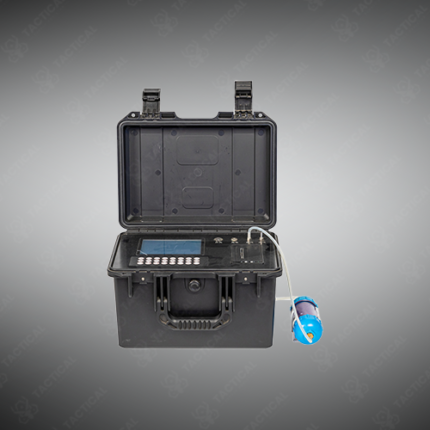
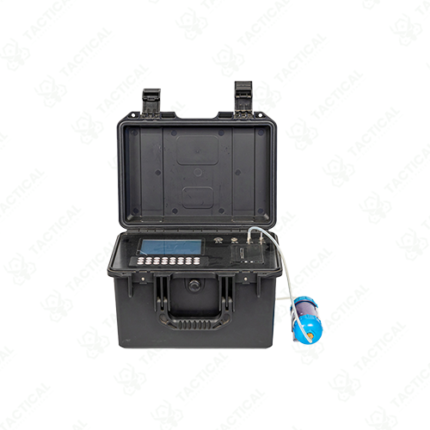
Radon Detector
Radon detectors measure radon-222 gas concentration in indoor and outdoor environments. This naturally occurring radioactive gas accumulates in enclosed spaces above uranium-bearing geological formations. Building safety inspectors, occupational health officers, mine safety teams, and public health authorities across Pakistan use these detectors to assess exposure levels. Basements, ground-floor rooms, tunnels, and underground workspaces present the highest accumulation risk.
Detection technology covers three main types. Electret ion chambers use a statically charged Teflon disc inside a sealed air volume. Radon-derived alpha particles ionize the air inside the chamber, discharging the electret at a rate proportional to radon concentration over the measurement period. Alpha track detectors use CR-39 polymer film that records physical damage tracks from alpha particle impacts. Exposure periods run between 30 and 90 days. Additionally, laboratory microscopy counts track density to calculate integrated radon exposure from the film. Continuous electronic monitors use silicon semiconductor detectors to measure radon concentration in real time. These display current and averaged values on an onboard LCD without requiring laboratory analysis.
Measurement units use becquerels per cubic meter. The WHO reference level sits at 100 Bq/m³. Furthermore, the standard action level in residential and workplace environments runs at 300 Bq/m³. Long-term average measurement over 90 days gives more reliable exposure data than short-term spot readings. Radon concentration fluctuates significantly with ventilation changes, weather conditions, and seasonal soil gas pressure variation.
Data logging on electronic monitors stores concentration readings at defined intervals. USB export transfers data to radon survey software for trend analysis and regulatory reporting. Moreover, passive alpha track kits include deployment instructions, a sealed return envelope, and a laboratory analysis report. The report covers measured radon exposure and comparison against recommended action levels for the specific building or workspace type.
Tactical Supply Pakistan supplies radon detectors to building safety inspection services, mine occupational health programs, public health authorities, and construction compliance teams requiring radon measurement capability across residential, industrial, and underground environment assessments throughout Pakistan.
Showing the single result