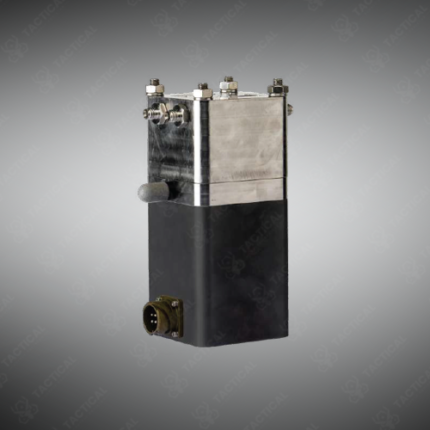
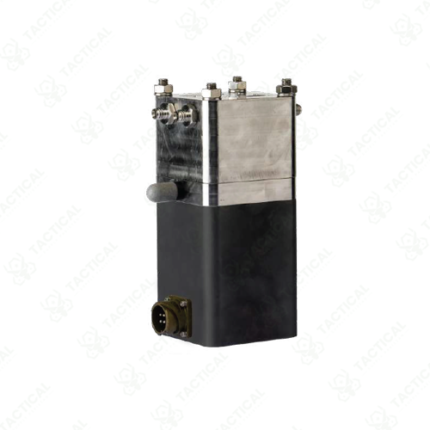
Pneumatic Eject Missile Launchers
Pneumatic eject missile launchers use compressed gas to expel a missile from its launch tube before the weapon’s own motor ignites. This cold-launch approach separates the ejection event from motor ignition entirely. It allows use in enclosed spaces, submarine applications, and vehicle-mounted configurations where rocket motor backblast would cause structural or operational problems inside the launch platform.
The launch sequence begins when compressed air or nitrogen releases from an onboard pressure vessel into the launch tube. This gas charge accelerates the missile along the tube and ejects it clear of the platform. Motor ignition triggers automatically after the missile travels 10 to 30 meters from the tube exit. Ejection velocity at tube exit runs between 30 and 60 meters per second. Additionally, launch tube pressure during the ejection cycle runs between 20 and 60 bar depending on missile weight and tube dimensions.
Launch tube construction uses high-strength steel or composite materials rated for repeated internal pressure cycles. Sealed breech mechanisms maintain gas seal integrity without venting compressed gas into the crew compartment. Furthermore, pressure vessels on vehicle-mounted and submarine configurations store enough gas for multiple consecutive launches without recharging between shots. The number of available launches per charge depends on tube size, gas volume, and system operating pressure specifications.
Fire control integration connects the launcher to platform systems through standard electrical interfaces. Launch authority, arming status, and firing commands transmit through shielded cable runs to the launcher assembly. Moreover, safety interlocks prevent tube pressurization unless all pre-fire conditions are simultaneously satisfied. These conditions include weapon arming status, tube clear indication, and fire command authorization from the platform fire control system.
Tactical Supply Pakistan supplies pneumatic eject missile launchers to defense procurement agencies and military platform integration programs requiring cold-launch missile ejection technology for vehicle, naval, and fixed installation applications across Pakistan’s defense requirements.
Showing the single result