Passive FTIR Remote
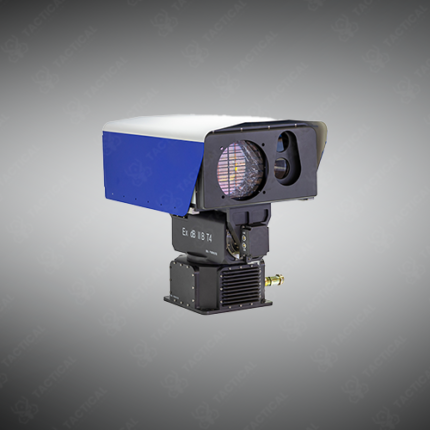
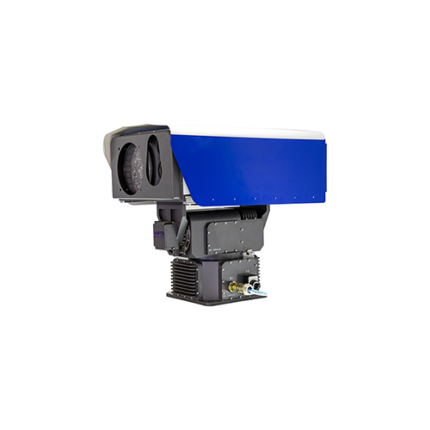
Passive Fourier transform infrared remote sensing systems detect and identify airborne chemical compounds by collecting and analyzing infrared radiation naturally emitted or reflected by gas clouds against the thermal background of the surrounding environment. Operating without any active illumination source, these ground-based or vehicle-mounted instruments survey open areas, fence lines, and downwind zones for chemical threats, toxic industrial leaks, and hazardous material releases from safe standoff distances without requiring personnel to enter potentially contaminated zones.
The spectrometer core uses a Michelson interferometer configuration, with a moving mirror generating optical path difference as it travels, producing an interferogram that the onboard processor converts to a full infrared spectrum through fast Fourier transform computation. Detector arrays use cooled mercury cadmium telluride elements operating in the 7 to 14 micron long-wave infrared band, where most chemical warfare agents and toxic industrial chemicals display strong and distinctive absorption features. Additionally, spectral resolution runs between 1 and 8 wavenumbers per centimeter depending on mirror travel range, with finer resolution settings improving compound discrimination at the cost of longer acquisition time per spectrum.
Detection sensitivity for nerve agents, blister agents, and toxic industrial chemicals typically reaches sub-parts-per-million concentration levels at standoff ranges between 100 meters and 5 kilometers, depending on atmospheric temperature contrast, wind speed, and target compound concentration. Furthermore, real-time library matching algorithms compare incoming spectra against reference databases covering chemical warfare agents, explosives precursors, and industrial hazardous materials, producing compound identification and estimated concentration outputs within 2 to 5 seconds of spectral acquisition.
System integration options include fixed pedestal mounts for perimeter monitoring, vehicle roof rack assemblies for mobile patrol deployment, and pan-tilt gimbal heads for automated sector scanning. Moreover, data outputs cover georeferenced concentration mapping, alarm logs with compound identification fields, and raw spectral data files for post-incident forensic reanalysis.
Tactical Supply Pakistan supplies passive FTIR remote sensing systems to chemical defense units, industrial hazard response teams, border security formations, and critical infrastructure protection agencies requiring standoff chemical threat detection capability across Pakistan’s strategic and industrial zones.
Showing the single result