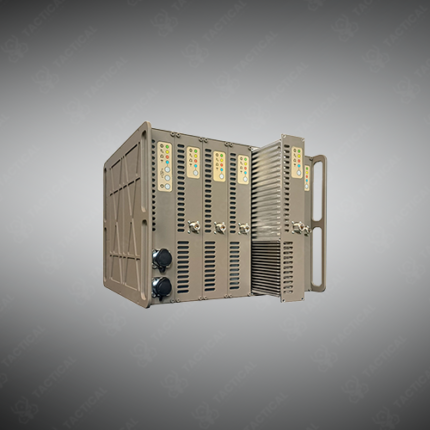
On Trigger Detection against Reactive Jamming Attacks
On-trigger detection against reactive jamming attacks identifies the precise moment a jamming system activates in response to a legitimate radio transmission — distinguishing reactive jammers from noise-based or constant jammers and enabling counter-countermeasure responses that restore communications before the jammer suppresses the full transmission.
Reactive jammers monitor a target frequency channel and activate their jamming signal only when they detect a legitimate transmission — responding within microseconds of sensing carrier energy above a threshold. This attack model is energy-efficient for the attacker and difficult to detect using conventional received signal strength (RSS) or packet delivery ratio metrics alone, since the channel appears clear between transmissions. Furthermore, on-trigger detection systems use time-domain analysis of the received signal envelope to identify the characteristic signature of a reactive jammer activation — detecting the abrupt rise in interference power that occurs immediately after the legitimate transmitter begins its burst, rather than the gradual noise floor variation of non-reactive interference sources.
Detection algorithms analyze the temporal correlation between transmission onset and jamming onset. A legitimate noise source or constant jammer shows no correlation with transmission timing. A reactive jammer consistently activates within a fixed latency window after each transmission begins — this latency fingerprint distinguishes reactive jamming from environmental interference with statistical confidence across a small number of observed transmission attempts. Additionally, energy detection combined with carrier sense multiple access (CSMA) timing analysis identifies reactive jammer presence even at low jamming-to-signal ratios where physical layer metrics alone fail to classify the interference source correctly.
Once reactive jamming is confirmed, counter-countermeasure responses include frequency hopping to move the transmission to a channel the jammer has not yet identified, burst transmission shortening to complete the message before the jammer’s activation latency expires, spread spectrum transmission to reduce the jammer’s ability to detect the carrier onset trigger, and cooperative relay routing that avoids the jammed channel entirely using alternative network paths. Moreover, software-defined radio platforms implement on-trigger detection and counter-countermeasure switching in reconfigurable firmware — adapting detection thresholds and response strategies to the specific jammer behavior observed in the operational environment without hardware changes.
These capabilities apply to Pakistan Army tactical radio network anti-jam programs, NESCOM electronic warfare research programs, Pakistan Air Force secure communications infrastructure, and university wireless communications research departments in Lahore and Karachi developing physical layer security solutions for military and critical infrastructure communications networks.
Tactical Supply Pakistan supplies on-trigger detection and anti-reactive jamming systems for military communications security, electronic warfare research, and tactical radio network protection procurement across Pakistan.
Showing the single result