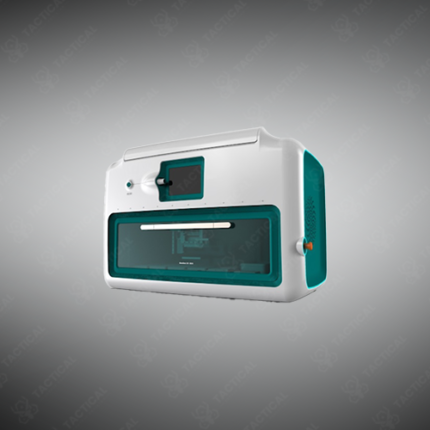
Nucleic Acid Extraction and Purification
Nucleic acid extraction and purification combines two sequential processing stages into a unified workflow, first releasing DNA or RNA from biological sample matrices and then removing co-extracted contaminants including proteins, lipids, polysaccharides, and residual reagents that would inhibit downstream molecular analysis steps. Performing both stages within a single validated protocol reduces handling steps, minimizes sample loss between stages, and shortens total processing time compared to running extraction and purification as separate independent procedures.
The extraction stage disrupts cell and tissue structures through mechanical, chemical, or thermal lysis methods depending on sample type. Mechanical disruption uses bead beating or sonication for tough matrices including plant tissue and environmental biofilm samples. Chemical lysis applies detergents and chaotropic salts such as guanidinium thiocyanate to denature proteins and dissolve membranes simultaneously. Additionally, proteinase K enzyme treatment digests residual protein fragments during lysis, improving both yield and downstream purity scores particularly for formalin-fixed or degraded forensic samples.
Purification follows immediately after lysis through silica membrane binding, magnetic bead capture, or anion exchange chromatography. Silica membrane columns retain nucleic acids under high-salt conditions while washing away contaminants across two to three wash steps before final elution in nuclease-free water or low-TE buffer. Furthermore, magnetic bead platforms automate wash and elution cycles through robotic liquid handlers, processing 96 samples in under 60 minutes with consistent inter-sample reproducibility across the full plate format. Elution volumes typically run between 50 and 200 microliters depending on downstream application concentration requirements.
Purity assessment after combined extraction and purification uses A260/A280 spectrophotometric ratios targeting values between 1.8 and 2.0 for DNA and 2.0 to 2.2 for RNA samples. Moreover, inhibitor removal efficiency matters particularly for environmental and forensic samples where PCR inhibitors including humic acids, hemoglobin, and collagen persist through standard extraction protocols without dedicated purification steps.
Tactical Supply Pakistan supplies nucleic acid extraction and purification systems to forensic DNA laboratories, hospital molecular units, biosecurity screening facilities, and environmental testing agencies requiring validated, high-purity sample preparation workflows across Pakistan.
Showing the single result