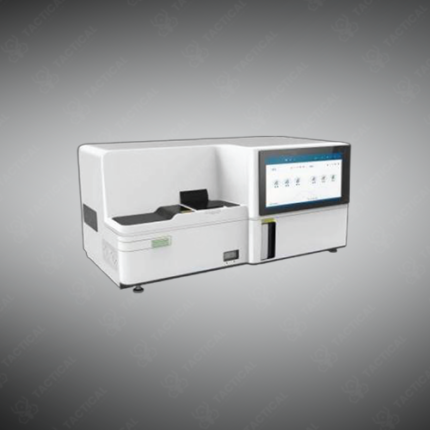
Next-Generation Sequencing (NGS)
Next-Generation Sequencing (NGS) determines the nucleotide sequence of DNA or RNA fragments through massively parallel processing, simultaneously sequencing millions to billions of fragments within a single instrument run rather than the sequential single-fragment approach earlier sequencing methods required. Genomics laboratories and clinical diagnostic centers adopted NGS technology because the parallel sequencing approach dramatically reduced both per-sample cost and total sequencing time compared to first-generation Sanger sequencing methods. Therefore, NGS adoption has expanded large-scale genomic analysis capability into research and clinical applications that earlier sequencing costs would have made impractical.
The sequencing workflow begins with library preparation, fragmenting input nucleic acid into pieces typically 150 to 500 base pairs in length and ligating adapter sequences to both fragment ends. Furthermore, these adapters enable the fragments to bind to the sequencing platform’s reaction surface, whether a flow cell, bead, or other substrate depending on the specific NGS technology employed, while also providing primer binding sites for the sequencing chemistry itself.
Illumina sequencing by synthesis chemistry, the most widely deployed NGS approach, incorporates fluorescently labeled reversible terminator nucleotides one base at a time, imaging the reaction surface after each incorporation cycle to determine which base added to each individual DNA cluster. Consequently, this cycle-by-cycle imaging approach builds the complete sequence read progressively, with current platforms achieving read lengths up to 300 base pairs and per-base error rates below 0.1 percent.
Alternative NGS chemistries, including nanopore sequencing and ion semiconductor sequencing, use different detection principles, measuring ionic current disruption or pH change respectively as nucleic acid passes through or incorporates onto the sequencing platform. Additionally, these alternative approaches offer distinct advantages including longer read lengths or reduced reagent costs depending on the specific technology and application requirements.
Bioinformatics analysis converts the raw sequencing data output into interpretable results, requiring substantial computational infrastructure to process the large data volumes NGS platforms generate.
In Pakistan, NGS technology serves university genomics research programs, hospital molecular diagnostic laboratories, public health surveillance, and agricultural biotechnology research. Tactical Supply Pakistan supplies Next-Generation Sequencing (NGS) platforms for genomics, clinical, and research procurement across Pakistan.
Showing the single result