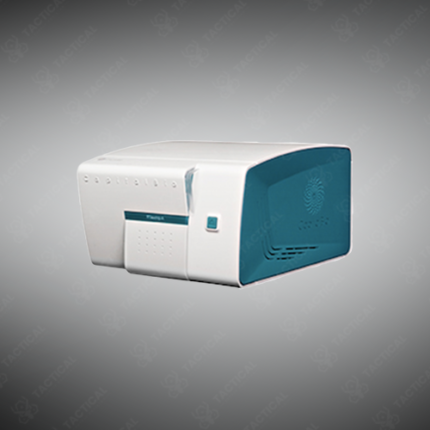
Microfluidic Amplification
Microfluidic Amplification combines nucleic acid amplification chemistry, typically PCR or isothermal methods, with micro-scale fluid channel technology to perform DNA and RNA replication within compact chip-based platforms rather than conventional benchtop thermal cyclers. Diagnostic developers and point-of-care testing manufacturers adopt microfluidic amplification because the reduced reaction volumes and integrated channel design enable faster reaction times and lower reagent consumption compared to standard laboratory amplification equipment. Therefore, microfluidic amplification platforms support portable and rapid diagnostic applications that conventional PCR equipment cannot address as effectively.
Reaction volumes within microfluidic amplification chips typically range from nanoliters to a few microliters per reaction chamber, dramatically smaller than the 10 to 50 microliter volumes standard in conventional PCR tubes. Furthermore, this volume reduction decreases the thermal mass that must heat and cool during each amplification cycle, allowing microfluidic thermal cycling to complete in significantly less time than equivalent benchtop instrument runs. Consequently, complete amplification protocols that take 60 to 90 minutes on standard thermal cyclers can finish in 15 to 30 minutes on optimized microfluidic platforms.
Channel-integrated heating elements, often using thin-film resistive heaters patterned directly onto the chip substrate, provide rapid and localized temperature control for the denaturation, annealing, and extension steps required during thermal cycling amplification. Additionally, continuous-flow microfluidic PCR designs move the sample through spatially fixed temperature zones rather than cycling the temperature of a fixed sample location, further accelerating the amplification process.
Isothermal amplification methods, including loop-mediated isothermal amplification (LAMP) and recombinase polymerase amplification (RPA), eliminate the thermal cycling requirement entirely, operating at a single constant temperature that simplifies microfluidic chip heating design and reduces power consumption for field-deployable diagnostic devices.
In Pakistan, microfluidic amplification platforms serve point-of-care diagnostic development, infectious disease screening programs, and university molecular biology research departments developing rapid testing technology. Tactical Supply Pakistan supplies microfluidic amplification devices and components for diagnostic and research procurement across Pakistan.
Showing the single result