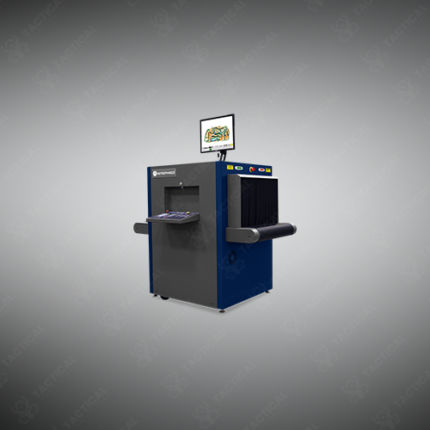
MAIL Scanner
Mail scanners use X-ray transmission imaging to inspect envelopes, documents, small packages, and flat mail items for concealed threats — including bladed weapons, explosive components, electronic initiators, biological agent powders, and chemical contaminants — before mail reaches recipients in government offices, corporate facilities, military installations, and critical infrastructure buildings.
Desktop mail scanners use X-ray generators at 90kV to 120kV to penetrate standard envelope and document thicknesses, projecting transmission images onto a monitor at conveyor belt speeds of 0.2 to 0.4 meters per second. Tunnel apertures on dedicated mail scanners start at 310×160mm — sized specifically for standard letter and A4 document formats. Wire resolution on professional units reaches 0.1mm — sufficient to detect fine wires, small metal components, and foil-lined materials concealed inside folded documents. Furthermore, dual-energy X-ray systems color-code the transmitted image by material type — displaying organic materials in orange, inorganic materials in green, and metals in blue — allowing trained operators to identify suspect powders, electronic components, and metallic objects without opening the item.
Automatic threat detection (ATD) algorithms on advanced units scan every image against threat libraries covering IED components, bladed objects, and dense organic material signatures — flagging suspect items with an audible alert and visual overlay without requiring operators to manually assess every envelope. This reduces fatigue-related missed detections during high-volume screening sessions. Additionally, chemical agent detection modules integrate with mail scanners in high-security government mail rooms — adding vapor sampling from opened envelopes to the X-ray screening workflow for biological powder and chemical threat identification.
Lead-lined conveyor designs contain scatter radiation within the tunnel — protecting operators from cumulative X-ray exposure during continuous operation. Automatic radiation interlock systems prevent X-ray generation when the tunnel entry or exit curtains are raised. Operating software logs every scanned item with timestamp, operator ID, and image archive for audit trail compliance.
These systems serve Pakistan government ministry mail rooms in Islamabad, Pakistan Army GHQ and corps headquarters mail facilities, diplomatic mission security teams, corporate headquarters in Karachi and Lahore, and Pakistan Customs document and small parcel inspection operations requiring systematic mail threat screening.
Tactical Supply Pakistan supplies mail scanners for government mail room security, military mail facility screening, and corporate parcel inspection procurement across Pakistan.
Showing the single result