Magnetometer Sensor
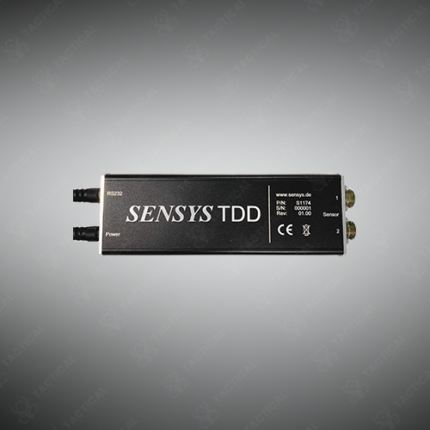
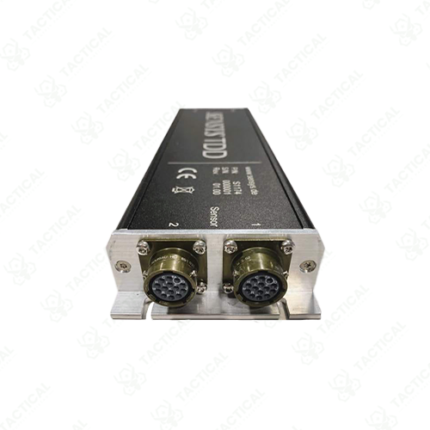
Magnetometer sensors measure the strength, direction, and gradient of magnetic fields — serving as the core detection element in geophysical survey instruments, navigation systems, UXO detectors, military platform attitude reference systems, and scientific research equipment. Sensor selection determines the measurement sensitivity, dynamic range, operating environment, and output interface of the complete magnetometer system built around it.
Fluxgate magnetometer sensors use a magnetically permeable core wound with drive and sense coils to measure vector magnetic field components in one, two, or three axes. Three-axis fluxgate sensors deliver heading accuracy of 0.1 to 0.3 degrees in magnetically clean environments — used in UAV attitude and heading reference systems, weapon stabilization platforms, and compass modules. Noise floors on professional fluxgate sensors reach 6 pT/√Hz on low-noise designs such as the Bartington Mag-03 series. Furthermore, proton precession sensors measure absolute total field values by detecting the precession frequency of protons in a hydrogen-rich fluid under a pulsed polarizing field — delivering absolute accuracy without calibration drift, making them the standard reference instrument for base station operation in geophysical surveys.
Overhauser magnetometer sensors use dynamic nuclear polarization to achieve continuous measurement rather than the pulsed cycling required by proton precession designs — delivering sensitivity of 0.01 nT RMS at sampling rates up to 5Hz without the measurement gaps that limit proton precession in fast-moving survey platforms. Cesium vapor sensors use optical pumping of cesium atoms to measure total field at sensitivities below 0.004 nT/√Hz — the highest sensitivity available in field-deployable sensors, used in airborne UXO survey, submarine magnetic anomaly detection, and high-resolution geological mapping. Additionally, MEMS magnetometer sensors integrate three-axis measurement in silicon chip packages weighing milligrams — used in smartphones, GPS-aided navigation modules, and miniature UAV heading sensors where size and power consumption outweigh the need for sub-nanoTesla sensitivity.
Atomic magnetometer sensors based on optically pumped rubidium or potassium vapor reach femtoTesla sensitivity levels at room temperature — applied in magnetoencephalography (MEG) brain imaging, submarine detection, and fundamental physics experiments requiring sensitivity beyond conventional sensor technologies.
These sensors serve Pakistan Army navigation and weapons stabilization programs, Survey of Pakistan aeromagnetic survey operations, mineral exploration contractors in Balochistan and Gilgit-Baltistan, university physics and geophysics research departments in Lahore and Karachi, and Pakistan Navy submarine and surface vessel magnetic signature management programs.
Tactical Supply Pakistan supplies magnetometer sensors for geophysical survey, navigation, UXO detection, and scientific research procurement across Pakistan.
Showing all 2 resultsSorted by latest