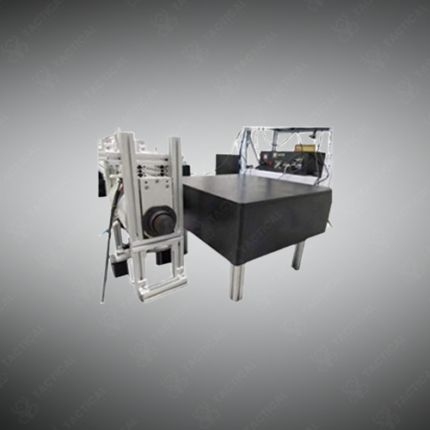
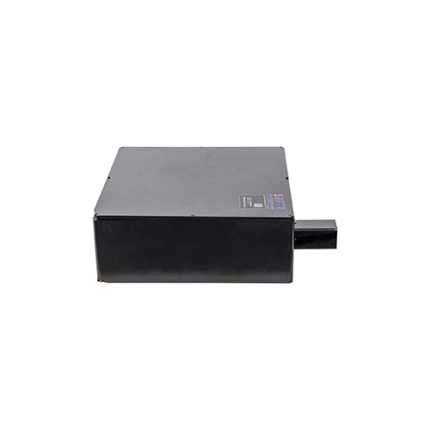
Magneto-Optic Kerr Effect
The Magneto-Optic Kerr Effect (MOKE) describes the change in polarization state that occurs when polarized light reflects off the surface of a magnetized material, with the rotation angle and resulting intensity change directly proportional to the surface magnetization. Materials scientists and thin film researchers rely on this effect because it provides a sensitive, non-contact method for characterizing magnetic properties at surfaces and in thin films without requiring physical probes that could damage delicate sample structures. Therefore, MOKE measurement has become a standard characterization technique across magnetic materials research and quality control applications.
Three distinct measurement geometries exist depending on the relative orientation of sample magnetization, incident light plane, and sample surface. Polar MOKE detects magnetization oriented perpendicular to the sample surface, producing the strongest signal response and finding common use in magneto-optic data storage research. Furthermore, longitudinal MOKE measures in-plane magnetization parallel to the incidence plane of the light, while transverse MOKE measures in-plane magnetization perpendicular to that incidence plane, with each geometry offering different sensitivity to specific magnetic anisotropy directions within the sample.
The measurement typically uses a focused laser beam at incident angles between 0 and 70 degrees relative to the sample normal, with polarization optics positioned before and after sample reflection to detect the small rotation angle, typically between 0.01 and 1 degree depending on the material system. Consequently, lock-in detection and signal averaging techniques improve measurement sensitivity for materials exhibiting weaker Kerr rotation signals.
Applied magnetic field coils integrated into the sample stage allow field-dependent measurement, generating hysteresis loops that reveal coercivity, remanence, and saturation behavior. Additionally, spatially resolved MOKE microscopy combines the effect with imaging optics, visualizing magnetic domain structure and domain wall dynamics across the sample surface in real time.
In Pakistan, magneto-optic Kerr effect instruments serve university physics and materials science departments, magnetic storage media research programs, and quality control laboratories characterizing electrical steel and permanent magnet products. Tactical Supply Pakistan supplies Magneto-Optic Kerr Effect measurement systems for materials research and quality control procurement across Pakistan.
Showing the single result