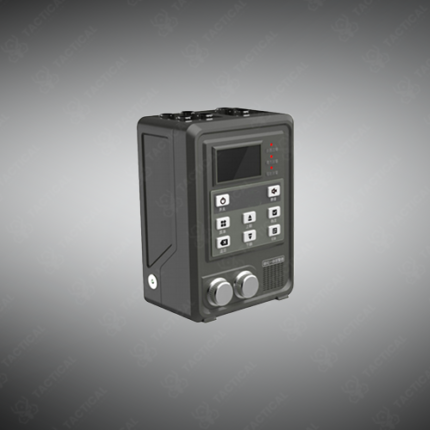
Intrusion Detection Alarm System
Intrusion detection alarm systems identify unauthorized entry into protected areas and trigger audible, visual, or remote alerts to security personnel — forming the electronic detection layer of a facility’s physical security architecture. These systems monitor doors, windows, walls, perimeter fences, and interior spaces continuously, generating alarms the moment a breach or movement event occurs within a defined zone.
Sensor technologies vary by detection principle and installation environment. Passive infrared (PIR) motion detectors identify changes in infrared radiation caused by human body heat moving through the detection zone — covering areas from 6 to 20 meters depending on lens configuration. Magnetic door and window contacts trigger immediately when a protected opening separates from its frame. Dual-technology detectors combine PIR with microwave Doppler sensing — requiring both technologies to confirm movement simultaneously before triggering, which reduces false alarms from air conditioning drafts, animals, and thermal gradients. Furthermore, glass break detectors use acoustic sensors tuned to the specific frequency signatures of breaking glass — activating within milliseconds of impact without requiring the glass to open fully.
Fence-mounted vibration sensors detect cutting, climbing, and impact attempts along perimeter barriers. Active infrared beam detectors project invisible beams across open corridors or fence lines and trigger on beam interruption. Seismic sensors embedded in walls or floors detect drilling and breaking attempts through structural vibration analysis. Additionally, fiber optic perimeter cable systems detect microbends caused by physical contact along the entire cable length — covering hundreds of meters from a single detection module without active electronics at field sensor points.
Control panels with zone mapping display active alarm locations to security operators and transmit alerts via PSTN, GSM, IP network, or radio to monitoring centers and response teams. Grade 3 and Grade 4 EN 50131-certified panels meet the highest European intrusion detection standards for high-risk commercial and government applications. Power backup through sealed lead-acid or lithium batteries maintains full system operation for 12–72 hours during mains power failure.
These systems serve Pakistan’s government ministry buildings in Islamabad, corporate office campuses across Karachi and Lahore, military equipment storage facilities, bank branch networks, and industrial facilities in Faisalabad and Multan requiring reliable, auditable intrusion detection across single-site and multi-site deployments.
Tactical Supply Pakistan supplies intrusion detection alarm systems for facility security, perimeter protection, and government building monitoring procurement across Pakistan.
Showing the single result