FPV Drones
FPV (First Person View) Drones are unmanned aerial vehicles flown through a live video feed transmitted from a camera mounted on the drone to goggles or a monitor worn or held by the pilot, creating an immersive flight experience where the operator perceives the flight environment from the drone’s perspective rather than observing the aircraft from a ground-based external viewpoint. The real-time video link eliminates the spatial disorientation of line-of-sight flying at high speeds or in complex environments, making FPV the preferred control method for high-speed racing, proximity flying, aerial cinematography, and tactical reconnaissance missions requiring precise low-altitude navigation.
The FPV system consists of three core components: an onboard camera with a wide field of view — typically 120 to 165 degrees diagonal — transmitting live video at 720p to 1080p resolution on analog systems or 1080p to 4K on digital FPV platforms, a video transmitter broadcasting on 5.8GHz, 2.4GHz, or proprietary digital frequency bands at power outputs from 25mW to 1,000mW, and a receiving display unit — FPV goggles or ground monitor — decoding the transmitted feed with latency as low as 1 to 28 milliseconds on digital systems. Low latency is critical for responsive control at speeds exceeding 100km/h on racing and freestyle frames.
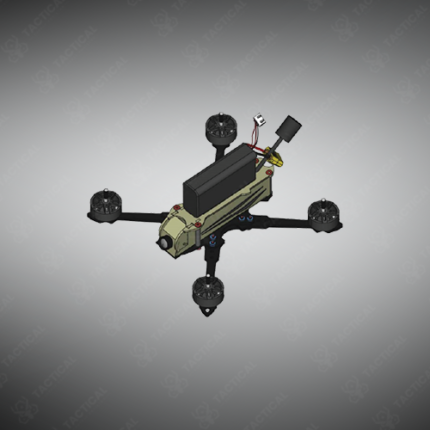
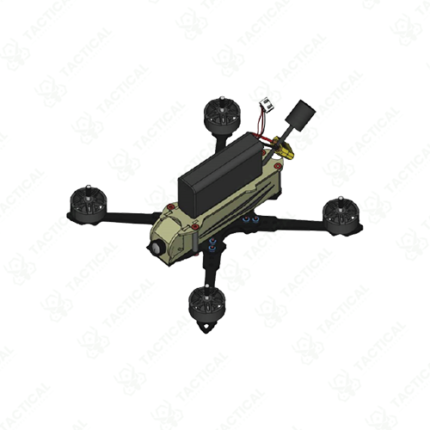
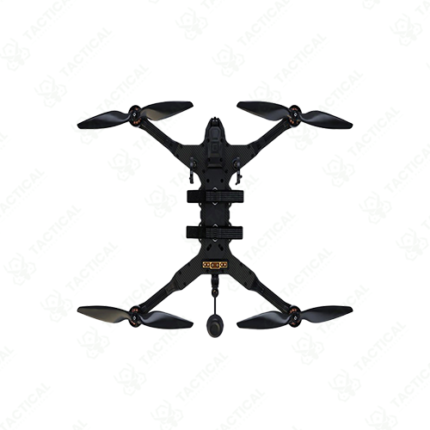
Drone frames for FPV use are built from 3K carbon fiber monocoque or tube construction in sizes from 2-inch to 7-inch motor-to-motor diagonal, with motor sizes, KV ratings, and propeller geometry selected to optimize thrust-to-weight ratio for the intended flight style. 5-inch freestyle and racing quads — the most widely used configuration — run 2,200 to 2,600KV brushless motors on 4S to 6S lithium polymer batteries, producing thrust-to-weight ratios exceeding 8:1 and top speeds above 150km/h. Flight controllers running Betaflight, iNAV, or Ardupilot firmware manage motor mixing, PID stabilization, and failsafe behavior.
Long-range FPV systems using digital video links and RC control protocols with ranges of 10 to 30 kilometers extend FPV applications to reconnaissance, border surveillance, search and rescue, and infrastructure inspection missions beyond visual line of sight.
In Pakistan, FPV drones are used by competitive racing pilots, aerial cinematographers, security and reconnaissance operators, military training programs, and search and rescue teams requiring agile, low-altitude aerial platforms.
Tactical Supply Pakistan supplies FPV drones across racing, freestyle, cinematic, and long-range reconnaissance configurations for sport, professional, and tactical procurement across Pakistan.
Showing all 2 resultsSorted by latest