Drones Detection Systems
Drone Detection Systems are sensor networks and signal processing platforms deployed to identify, locate, and track unmanned aerial vehicles (UAVs) operating within a defined airspace volume. Providing the foundational awareness layer for any counter-UAS operation, detection systems must reliably distinguish drone targets from birds, aircraft, and other airborne objects across varying environmental conditions, day and night, without generating excessive false alarm rates that degrade operator confidence.
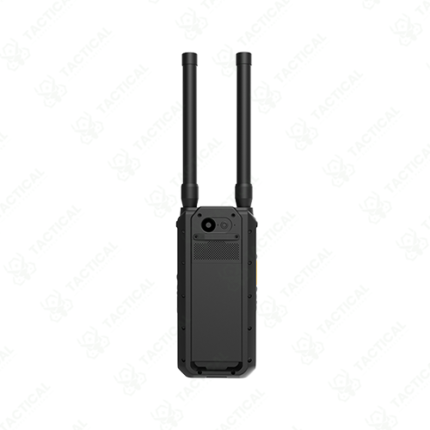
RF spectrum monitoring forms the primary detection technology in most ground-based systems, with receivers continuously scanning 433MHz, 900MHz, 2.4GHz, and 5.8GHz frequency bands for drone-specific control link and video transmission emissions. Direction-finding algorithms process signal arrival data across multiple antenna elements to calculate the bearing of both the drone and its ground control station, providing simultaneous localization of the UAV and its operator. Detection range for RF-based systems extends from 1 to 5 kilometers under open-sky conditions depending on antenna configuration and local RF environment.
Radar subsystems extend detection capability to RF-silent, autonomous, and pre-programmed drones that produce no detectable radio emissions. Micro-Doppler signal processing identifies the characteristic rotational signature of drone propellers within radar returns, enabling reliable classification of multirotor and fixed-wing UAV targets against background clutter at ranges up to 10 kilometers on medium-aperture systems.
Acoustic sensor arrays detect the motor and propeller noise signature of low-altitude drones at ranges of 200 to 500 meters, providing a passive short-range detection layer effective in urban and indoor environments where radar and RF sensors face performance limitations.
Electro-optical and infrared cameras integrated into detection networks provide visual confirmation, operator identification, and drone classification at medium ranges, with automatic slew-to-cue from radar or RF detection events reducing manual camera operator workload.
All sensor outputs feed into a central fusion engine that correlates detections across modalities, resolves track ambiguities, and presents a unified airspace picture with classified drone tracks to the operator interface.
In Pakistan, drone detection systems protect military installations, airports, power plants, government compounds, border crossings, and large public events from unauthorized UAV activity.
Tactical Supply Pakistan supplies drone detection systems across RF, radar, acoustic, and EO/IR sensor categories for defense, critical infrastructure, and security procurement nationwide.
Showing the single result