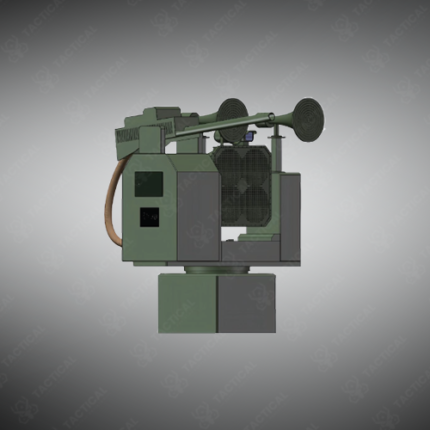
Deterrent for Unmanned Aerial Systems
A deterrent for unmanned aerial systems is a non-lethal system generating acoustic, electromagnetic, or visual signals compelling unauthorised drones to cease operations or withdraw from protected airspace without requiring kinetic destruction that creates debris hazards or fragmentation risks. The deterrent approach provides escalation-of-force option between passive monitoring and active kinetic engagement.
Premium deterrent systems employ multiple warning modalities increasing probability of deterring operator recognition and response. Long-range acoustic devices (LRAD) generate directional sound beams audible at 300+ metres enabling audible warning to potential operators. Visual warning systems employ high-intensity strobe lights creating disorientation preventing accurate drone control. RF warning signals transmitted on drone command frequencies provide electronic notification of protected zone presence.
Operational deployment involves graduated response — initial detection triggers acoustic and visual warnings enabling voluntary withdrawal, followed by RF jamming forcing loss of pilot control if warnings are ignored. Integration with command and control networks enables information sharing preventing repeat incursions through perpetrator identification.
Limitations include reliance on operator recognition and response — determined adversaries may ignore warnings prioritising mission completion. Effective deterrence requires credible threat of escalation to kinetic engagement if warnings are disregarded.
Environmental operation across -10°C to +50°C temperature ranges supports deployment across Pakistan’s varied climate zones. Portable configurations enable rapid deployment to emerging drone threats.
In Pakistan, drone deterrent systems support military and critical infrastructure protection against unmanned intrusions.
Tactical Supply Pakistan supplies deterrent systems for unmanned aerial vehicle exclusion and airspace protection.
Showing the single result