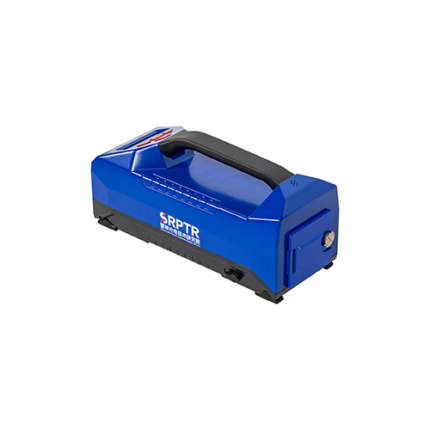
Chemical Agent Detectors CADs
Chemical Agent Detectors (CADs) are portable or fixed electronic instruments designed to identify and alert operators to the presence of toxic chemical warfare agents and hazardous industrial compounds in the surrounding atmosphere. CADs serve as the frontline warning tool for military personnel, first responders, and security teams operating in environments where chemical contamination is a credible threat, providing rapid agent identification before concentrations reach dangerous exposure thresholds.
Handheld CAD units typically weigh between 0.5kg and 1.5kg and are powered by rechargeable lithium-ion batteries or standard AA cells, providing 8 to 12 hours of continuous monitoring per charge. The primary detection technologies employed include ion mobility spectrometry (IMS), surface acoustic wave (SAW) sensing, and flame photometry (FPD) — each optimized for different agent families. IMS-based CADs identify nerve agents and blister agents including GB, GD, VX, HD, and Lewisite at concentrations as low as parts-per-billion (ppb). FPD detectors are particularly effective for phosphorus-containing nerve agents and sulfur-based blister agents.
Audio and visual alarms activate within seconds of detecting agent concentrations above pre-set thresholds, with multi-level alert tones distinguishing between warning and danger concentration levels. Agent identification is displayed on an LCD or OLED screen, with some models providing agent-specific read-outs rather than general hazard alerts.
CADs are ruggedized to military standards — typically MIL-STD-810 — with resistance to shock, vibration, dust, and humidity for field deployment across Pakistan’s varied operational environments.
Pakistani Army EOD units, civil defense teams, industrial chemical facilities, and border security forces deploy CADs for both routine monitoring and emergency response operations.
Tactical Supply Pakistan supplies Chemical Agent Detectors for defense, security, and industrial safety procurement across Pakistan.
Showing the single result