TDR
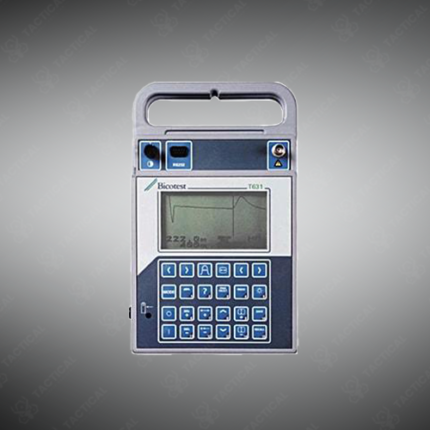
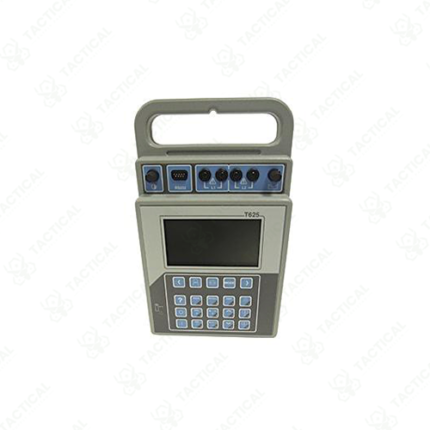
TDR, or time-domain reflectometry, is a cable testing technique that sends electrical pulses along conductors and measures reflection characteristics to identify cable faults, locate breaks, and verify cable integrity without requiring physical cable exposure or excavation. This non-destructive testing method enables rapid fault location in buried telecommunications cables, power distribution systems, and sensor networks, reducing repair time and minimizing unnecessary excavation in areas where cable defects are suspected.
Operating principle transmits brief electrical pulses down the cable under test. Cable discontinuities including breaks, shorts, corrosion, and water ingress create reflections returning toward the instrument. Measurement of reflection arrival time and amplitude enables calculation of fault distance and severity. High-speed sampling captures reflection waveforms revealing fault characteristics. Advanced instruments display time-domain traces analogous to radar displays, with distance scale converted from propagation time through known cable velocity factor.
Cable velocity factor depends on insulation material and cable construction. Calibration with known cable samples establishes velocity factor for specific cable types, enabling accurate distance calculation for faults at unknown locations. Pulse width adjustment optimizes spatial resolution balancing measurement sensitivity against granularity in fault location.
In Pakistan, telecommunications companies use TDR for fiber optic and copper cable fault location. Power distribution utilities employ it for underground power cable testing. Military communications networks use it for secure cable system integrity verification. Infrastructure maintenance programs utilize it for early fault detection preventing service interruptions.
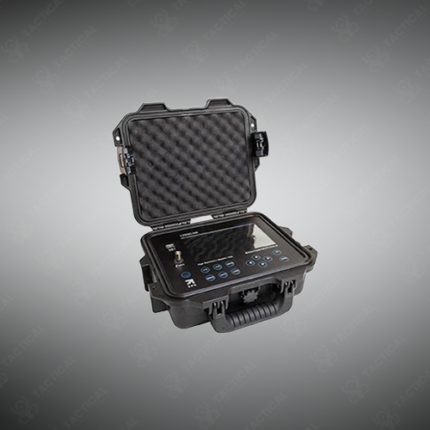
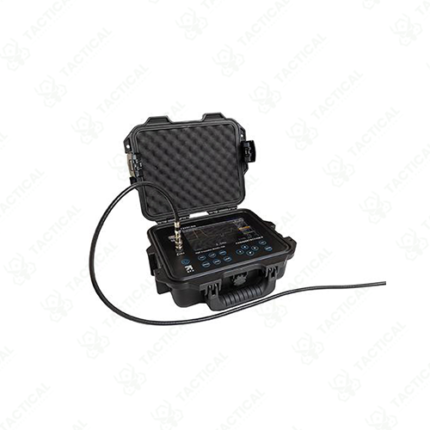
Tactical Supply Pakistan supplies TDR instruments for telecommunications, power utility, military, and infrastructure cable testing applications across Pakistan.
Showing all 2 resultsSorted by latest