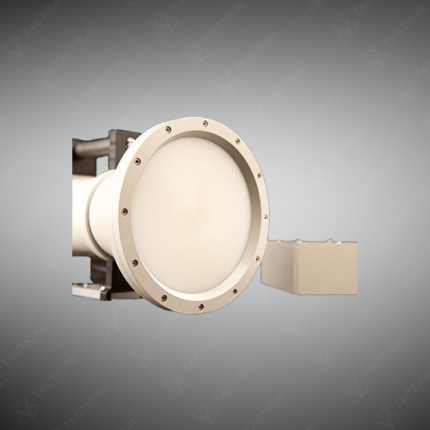
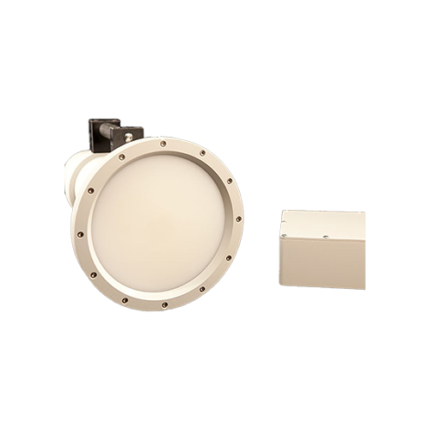
Short Range Air Defense Radar
Short range air defense (SHORAD) radars detect, track, and classify low-altitude aerial threats including aircraft, helicopters, cruise missiles, drones, and rockets within engagement ranges of 10 to 40 kilometers — providing the sensor layer that guides SHORAD weapon systems including surface-to-air missiles, anti-aircraft guns, and directed energy effectors onto their targets. These radars operate at lower altitudes and shorter ranges than long-range air surveillance systems, focusing on the low-level threat environment that longer-range radars struggle to cover due to earth curvature and terrain masking.
SHORAD radars use X-band (8–12GHz), Ku-band (12–18GHz), or Ka-band (26–40GHz) frequencies. These deliver the range resolution and target discrimination needed to separate small drone targets from ground clutter at low elevation angles. 3D radar designs measure azimuth, range, and elevation simultaneously — providing full target track data including altitude without separate height-finder radars. Pulse Doppler processing and moving target indicator (MTI) filters extract moving aerial targets from stationary ground clutter. Furthermore, active electronically scanned array (AESA) designs steer the beam electronically — providing simultaneous multi-target tracking, rapid revisit rates, and resistance to jamming through frequency agility and low-probability-of-intercept waveform design.
Detection range against a 1m² radar cross-section target reaches 20 to 40 kilometers on professional SHORAD systems. Small drone detection ranges extend to 5 to 15 kilometers against 0.01m² targets depending on radar power and altitude. Additionally, automatic target recognition (ATR) algorithms classify detected tracks as fixed-wing aircraft, rotary-wing, ballistic projectile, or multi-rotor drone — providing weapon system operators with threat type data before engagement authorization.
Integration with SHORAD fire control systems connects radar track data to missile launcher pointing mechanisms, gun fire control computers, and directed energy weapon tracking gimbals — providing continuous target handoff from detection through engagement without manual targeting input between sensor and effector.
These radars serve Pakistan Army air defense regiment equipment programs, Pakistan Air Force airfield and base protection systems, Pakistan Navy vessel air defense sensor suites, and critical facility protection programs at PAEC nuclear installations and government facilities in Islamabad and Rawalpindi requiring low-altitude aerial threat detection and tracking capability.
Tactical Supply Pakistan supplies short range air defense radars for SHORAD fire control, drone detection, airfield protection, and critical facility air defense procurement across Pakistan.
Showing the single result