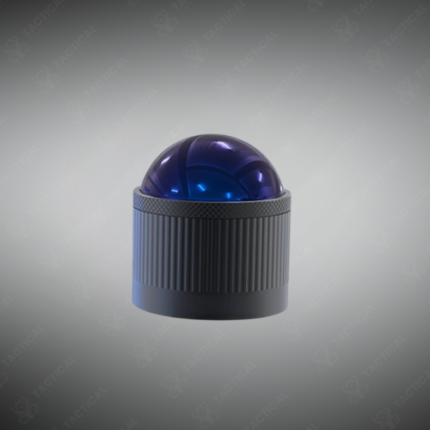
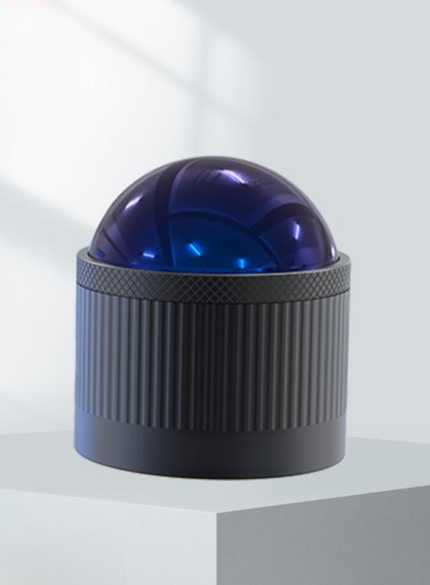
Time of Flight (ToF) Sensor
A Time of Flight sensor measures distance by timing how long light takes to travel to an object and bounce back. The sensor emits a pulse, usually infrared, and a receiver captures the reflection. Onboard circuitry calculates distance using the known speed of light. This happens in microseconds, letting the sensor update distance readings dozens or hundreds of times per second. Range varies by model, covering a few centimetres for close-proximity sensors up to 10-15 metres for longer-range industrial versions.
Accuracy typically falls within 1-2cm at short range, with some drift at maximum distance depending on target reflectivity. Dark or non-reflective surfaces absorb more light, slightly reducing effective range compared to bright or reflective targets. Sensor size stays compact, often under 2cm across for the sensing module itself, fitting into small devices like drones, robots, and handheld tools without adding noticeable bulk. Power draw stays low, typically under 500mW during active scanning, suited to battery-powered equipment needing all-day operation.
Output connects through I2C, SPI, or UART interfaces, common protocols for feeding distance data into a microcontroller or onboard computer. Multiple sensors can run in an array, giving a device a wider field of coverage for obstacle detection rather than a single point reading. Some models add ambient light filtering, reducing false readings caused by strong sunlight interfering with the infrared signal.
Robotics platforms use ToF sensors for obstacle avoidance and navigation without needing a full camera-based vision system. Drones use them for altitude hold and landing assistance close to the ground. Security systems also use ToF sensors for gesture detection and object counting at entry points, offering a lower-cost alternative to camera-based analytics for simple presence detection.
Tactical Supply Pakistan supplies Time of Flight sensors to robotics developers, drone manufacturers, and security system integrators across Pakistan. Range and interface type are matched to each project’s requirements during consultation.
Showing the single result