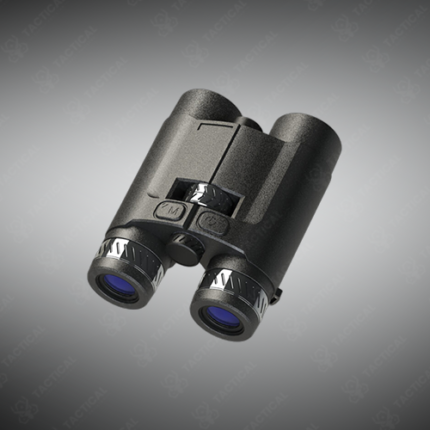
Rangefinder Binocular
Rangefinder binoculars integrate a laser distance measurement system into a standard binocular optical platform, combining two-eye magnified observation with single-button range measurement in a single handheld instrument. Military forward observers, border security teams, artillery spotters, and law enforcement surveillance personnel across Pakistan use these instruments to observe targets at magnification and measure accurate range data without switching between separate observation and ranging devices during time-critical field operations.
The optical system uses roof prism or Porro prism configurations with objective lens diameters between 32mm and 50mm, providing light-gathering area sufficient for effective observation in low ambient light during dawn and dusk patrol activity. Magnification runs between 7x and 12x on standard rangefinder binocular models, with 8×42 and 10×42 configurations dominating tactical procurement due to their balance between field of view width and image magnification at medium observation distances. Additionally, eye relief runs between 14mm and 20mm, accommodating eyeglass wearers during extended observation sessions at border posts and surveillance positions without requiring spectacle removal for full field of view access.
The laser rangefinder transmits a Class 1 or Class 1M eye-safe infrared laser pulse through one of the objective lenses, measuring round-trip travel time to calculate target distance with accuracy within plus or minus 1 meter at ranges between 10 meters and 2000 meters on standard models, extending to 5000 meters on military-grade variants against large reflective targets. Scan mode on advanced models provides continuous range updates at 0.5-second intervals as the operator sweeps across a target area, displaying the current distance reading in the eyepiece reticle overlay without requiring repeated button presses. Furthermore, angle compensation mode measures the inclination to the target simultaneously with range, calculating the horizontal distance component for accurate indirect fire calculations on sloped terrain common across Pakistan’s northern mountain operational zones.
Digital magnetic compass integration on some models adds bearing data to the range and inclination measurement, producing complete target location data for grid reference calculation. Moreover, ballistic reticle overlays with range-marked stadia lines allow immediate holdover estimation at measured distances without separate calculation for sniper and direct fire applications.
Tactical Supply Pakistan supplies rangefinder binoculars to military forward observer teams, border security formations, artillery fire direction units, and law enforcement surveillance teams requiring combined observation and accurate range measurement capability across Pakistan’s varied operational terrain.
Showing the single result