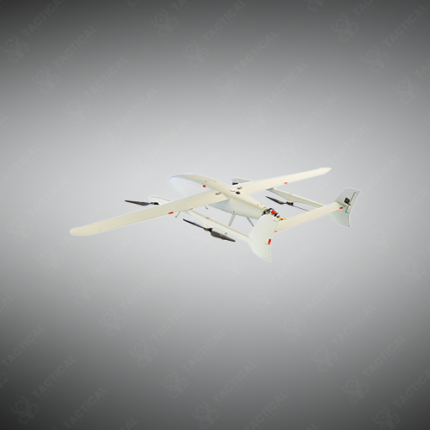
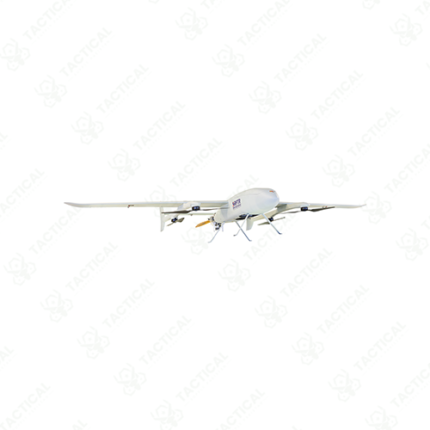
Radiation Detecting Drone
Radiation detecting drones carry miniaturized gamma, neutron, and alpha/beta radiation sensors on UAV platforms — enabling airborne radiological survey, nuclear facility inspection, contamination mapping, and emergency response operations without exposing human survey teams to elevated radiation fields. These platforms combine the spatial coverage advantage of aerial survey with real-time radiological data transmission to ground operators.
The radiation detection payload integrates one or more sensor types onto the drone airframe. Sodium iodide (NaI(Tl)) scintillator detectors mounted beneath the drone frame measure gamma dose rate continuously during flight — generating georeferenced dose rate maps as the drone flies pre-programmed survey lines. Spectroscopic detector payloads using LaBr3 or CZT crystals resolve the gamma energy spectrum in flight — identifying specific radionuclides including Cs-137, Co-60, I-131, and U-235 from their characteristic energy peaks without collecting physical samples. Furthermore, He-3 or Li-6 neutron detector modules identify fissile material signatures — distinguishing weapons-grade uranium and plutonium sources from naturally occurring radioactive material that generates gamma radiation alone.
Real-time data transmission links send dose rate readings, GPS coordinates, altitude, and spectral data to the ground control station continuously during flight. Ground software assembles these data streams into live radiological maps — allowing emergency response commanders to identify contamination hotspots and plan evacuation routes or access corridors for human teams while the drone is still airborne. Additionally, autonomous survey flight planning software generates optimized lawnmower or spiral search patterns matched to the survey area shape and required spatial resolution — completing surveys of several hectares per flight at 3 to 5 meters altitude above the surface.
Multi-rotor platforms carry radiation payloads of 0.5 to 2kg without significant endurance penalty on 30 to 45 minute flight batteries. Fixed-wing platforms extend flight time to 60 to 120 minutes per charge — covering larger survey areas in a single flight mission. Radiation-hardened electronics on inspection drone variants withstand cumulative gamma doses encountered during close-proximity nuclear facility inspection flights.
These drones serve Pakistan’s PAEC nuclear facility radiation monitoring programs, Pakistan Army CBRN reconnaissance units requiring standoff radiological survey capability, NDMA emergency response programs for industrial radiological accident response, Pakistan Customs radiation monitoring at Karachi Port for orphan source detection, and university nuclear physics research programs in Lahore and Islamabad.
Tactical Supply Pakistan supplies radiation detecting drones for nuclear facility survey, CBRN reconnaissance, emergency radiological response, and border radiation monitoring procurement across Pakistan.
Showing the single result