Radar Signal Analysis
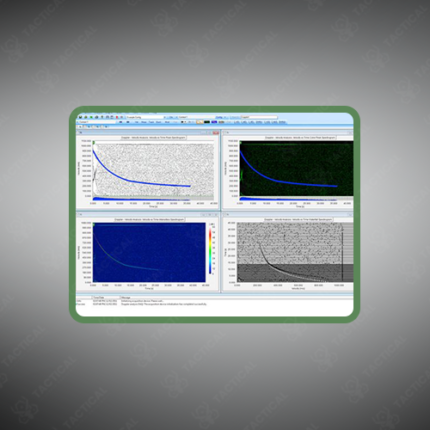
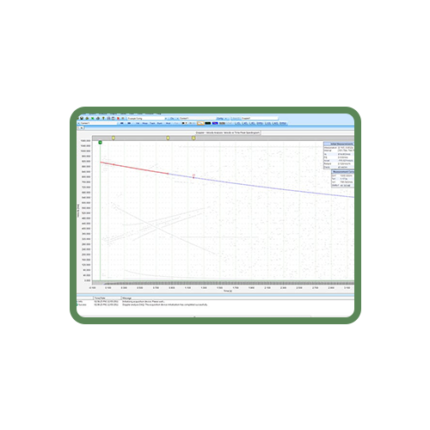
Radar signal analysis covers the measurement, characterization, and interpretation of radar waveforms — identifying signal parameters including frequency, pulse width, pulse repetition interval, modulation type, polarization, and scan pattern to support electronic intelligence (ELINT) collection, electronic warfare system development, radar performance verification, and electromagnetic compatibility testing.
Signal analysis begins with wideband RF capture using spectrum analyzers, signal analyzers, or dedicated radar analysis receivers. Modern vector signal analyzers capture radar signals across bandwidths of 160MHz to 1GHz — preserving full pulse detail including rise time, frequency modulation within the pulse, and inter-pulse phase relationships that narrowband receivers miss. Time-gated spectrum analysis isolates individual radar pulse spectra from continuous background signals — enabling pulse-level spectral characterization without averaging over multiple emitter types present simultaneously in the monitored spectrum. Furthermore, pulse descriptor word (PDW) extraction automatically measures pulse width, amplitude, carrier frequency, time of arrival, and angle of arrival for each detected pulse — building a parameterized pulse train dataset for emitter identification and classification algorithms.
Emitter identification uses specific emitter identification (SEI) techniques to distinguish individual radar units of the same type based on subtle hardware variations in their transmitted signals — oscillator phase noise fingerprints, pulse droop characteristics, and modulation imperfections unique to each physical transmitter. This capability supports ELINT order-of-battle analysis and threat library development for electronic warfare self-protection systems. Additionally, radar waveform analysis tools including the Rohde & Schwarz VSE software and Keysight 89600 VSA software perform pulse compression analysis, chirp linearity measurement, and spurious emission characterization on radar development test benches.
Phased array radar signal analysis adds beam steering verification — confirming that AESA antenna elements steer the main beam to programmed azimuth and elevation angles with specified sidelobe suppression. Moreover, clutter and target simulation using radar signal generators feeds test waveforms representing specific terrain, weather, and target Doppler scenarios into radar receivers — validating signal processing chain performance against defined detection and false alarm rate specifications.
These capabilities serve Pakistan Army electronic warfare unit ELINT collection and analysis programs, NESCOM radar development test and evaluation programs, Pakistan Air Force radar system acceptance testing, Pakistan Navy electronic warfare suite development, and university electrical engineering research departments in Lahore and Karachi conducting radar signal processing and electronic warfare research.
Tactical Supply Pakistan supplies radar signal analysis instruments and software for ELINT, electronic warfare development, radar acceptance testing, and signal processing research procurement across Pakistan.
Showing the single result