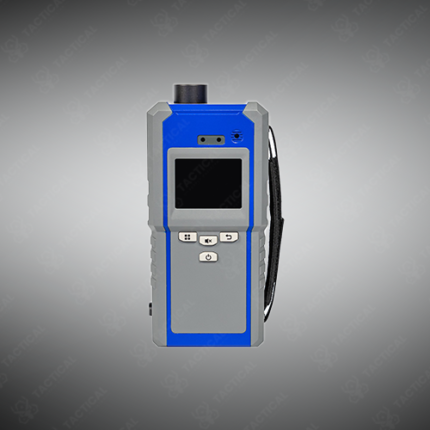
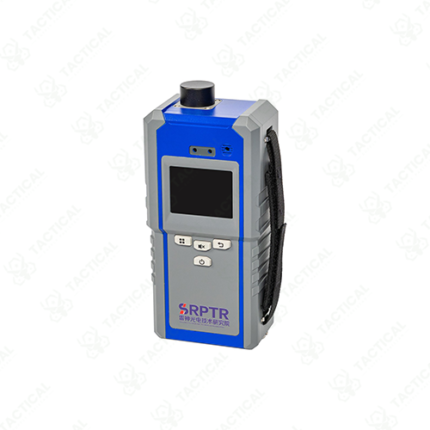
Portable Nuclear Radiation Detector
Portable nuclear radiation detectors measure ionizing radiation levels in field environments, identifying and quantifying alpha, beta, gamma, and neutron radiation from natural background, industrial sources, and potential radiological threat materials. These instruments serve radiation protection officers, border security nuclear detection teams, military radiological survey formations, and emergency response units requiring immediate field radiation measurement without fixed monitoring infrastructure.
Detection technology varies by radiation type and application requirement. Geiger-Müller tube detectors use a gas-filled cylindrical tube that generates an electrical pulse each time ionizing radiation passes through the sensitive volume, providing dose rate measurement for gamma and hard beta radiation with simple, robust circuitry requiring minimal calibration maintenance. Scintillation detectors use sodium iodide or cesium iodide crystal elements that emit light flashes when struck by gamma photons, with photomultiplier tubes converting light pulses to electrical signals and providing both dose rate measurement and energy spectroscopy capability for radionuclide identification. Additionally, semiconductor detectors using cadmium zinc telluride elements operate at room temperature without cooling requirements, delivering higher energy resolution than scintillation detectors in a compact form factor suitable for handheld field instruments requiring nuclide identification alongside dose rate measurement.
Measurement range covers dose rates from 0.01 microsieverts per hour at natural background levels up to 10 sieverts per hour on extended range instruments designed for accident response scenarios. Furthermore, nuclide identification capability on spectroscopic portable detectors covers common gamma-emitting isotopes including cesium-137, cobalt-60, iodine-131, uranium-235, and plutonium-239 signatures, with identification algorithms comparing measured energy spectra against onboard isotope libraries and displaying identified nuclide name and activity estimate within 30 to 120 seconds of detector exposure.
Audible click rate and visual bar graph displays provide immediate dose rate feedback without requiring screen reading in high-stress field survey conditions. Moreover, data logging stores dose rate and spectral data with GPS coordinates and timestamps, with Bluetooth or USB transfer to radiation survey management software for post-survey analysis and regulatory reporting.
Tactical Supply Pakistan supplies portable nuclear radiation detectors to border security nuclear detection units, industrial radiation safety teams, military radiological survey formations, and civil defense emergency response agencies requiring dependable field radiation measurement and nuclide identification capability across Pakistan’s nuclear security and radiation protection requirements.
Showing the single result