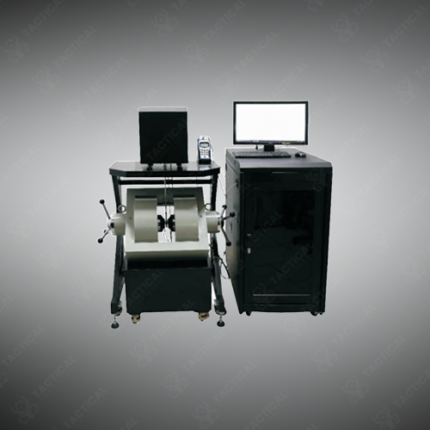
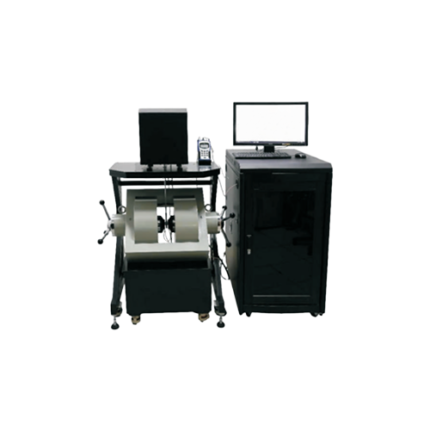
Optical Vibrating-Sample Magnetometer
An Optical Vibrating-Sample Magnetometer (OVSM) measures the magnetic moment of a sample by combining the mechanical oscillation principle of conventional vibrating-sample magnetometry with optical detection methods that replace traditional pickup coil sensing, achieving improved sensitivity and measurement capability for samples producing magnetic signals too weak for standard inductive detection systems to resolve accurately. Materials scientists working with thin film magnetic structures, paramagnetic compounds, and weakly magnetic materials select optical VSM configurations because optical detection sensitivity exceeds what conventional coil-based pickup arrangements can achieve for these challenging sample types. Therefore, optical detection directly extends magnetic characterization capability to material systems previously inaccessible to conventional VSM instruments.
The instrument oscillates a magnetized sample at a defined frequency and amplitude within an applied magnetic field, exactly as conventional VSM instruments do, but replaces the inductive pickup coils that typically sense the oscillating magnetic flux with a laser-based optical detection system. Furthermore, optical detection measures the magneto-optical Kerr or Faraday effect produced by the oscillating sample’s changing magnetic field, converting polarization rotation or intensity changes in the probe laser beam into a signal proportional to the sample’s magnetic moment.
Sensitivity advantages of optical detection arise because the optical measurement system can be designed to respond only to the magneto-optical effect of the sample itself, rather than the combined electromagnetic pickup from both the sample and any magnetic noise in the surrounding environment that inductive coil systems inherently detect alongside the target signal. Consequently, optical VSM configurations achieve noise floors significantly lower than conventional inductive detection, enabling measurement of ultra-thin film samples and weakly magnetic materials at signal levels below the conventional instrument’s practical detection threshold.
Applied field generation typically uses an electromagnet providing fields up to several tesla, with the complete measurement cycle sweeping field strength while continuously recording the optical detection signal to generate complete magnetization hysteresis loops.
In Pakistan, optical vibrating-sample magnetometers serve university physics and materials science research departments and defense research institutions studying advanced magnetic materials for sensor and memory applications. Tactical Supply Pakistan supplies Optical Vibrating-Sample Magnetometers for materials research and academic laboratory procurement across Pakistan.
Showing the single result