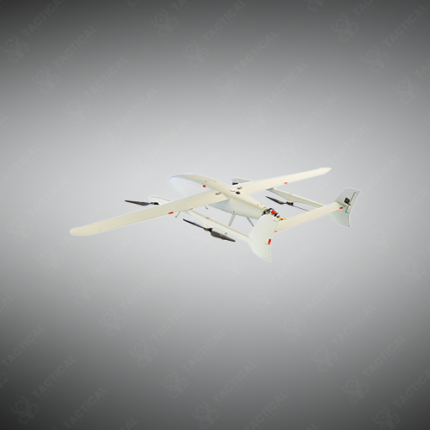
Nuclear Mission of Drones
Drones serve a growing range of nuclear-related missions — spanning radiation survey, facility inspection, perimeter security, threat detection, and emergency response operations at nuclear power plants, research reactors, and radioactive material storage sites. These unmanned platforms keep human operators outside hazardous radiation zones while extending sensor coverage across areas too dangerous, inaccessible, or time-consuming for ground teams to survey directly.
Radiation survey drones carry miniaturized gamma and neutron detectors — scintillation-based NaI(Tl) or LaBr3 detectors, Geiger-Müller tubes, and CANBERRA or Kromek compact spectrometers — mounted on multi-rotor or fixed-wing platforms. These airborne radiological survey systems map dose rate distributions across contaminated areas following nuclear incidents, identify radioactive material dispersion patterns, and locate orphan sources without exposing survey personnel to direct radiation fields. Furthermore, real-time data transmission links deliver dose rate readings and GPS position coordinates to ground control stations as the drone flies — building continuous radiological maps for emergency response commanders without waiting for post-flight data download.
Facility inspection drones enter reactor containment structures, spent fuel storage areas, cooling tower interiors, and pipe tunnel networks — performing visual and radiological inspection of structures that require costly and time-consuming scaffold construction or remote handling equipment for human access. Inspection payloads include 4K EO cameras, thermal sensors identifying heat anomalies in cooling systems, and ultrasonic thickness measurement modules checking pipe wall integrity without contact.
Counter-UAS protection missions deploy detection, jamming, and interception drone systems specifically around nuclear facilities — detecting hostile drone intrusion attempts within exclusion zones and activating electronic or kinetic defeat measures before an intruding drone reaches sensitive areas. Additionally, communication relay drones maintain command and control links between emergency response teams operating inside facility structures where radio propagation is blocked by concrete shielding walls.
These capabilities apply to Pakistan’s PAEC nuclear power plant security and inspection programs at Chashma and Karachi, Pakistan Nuclear Regulatory Authority physical protection assessments, and emergency response planning programs for radiological incident management across Pakistan’s nuclear energy and research infrastructure.
Tactical Supply Pakistan supplies nuclear mission drone systems for radiological survey, facility inspection, perimeter protection, and emergency response procurement across Pakistan.
Showing the single result