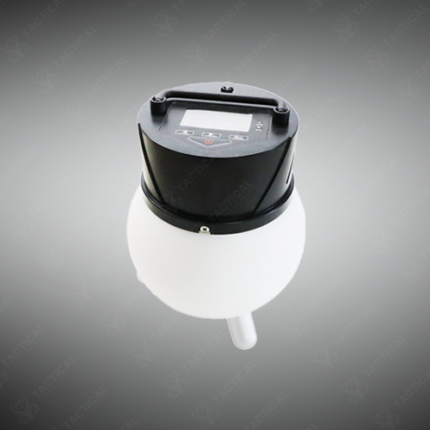
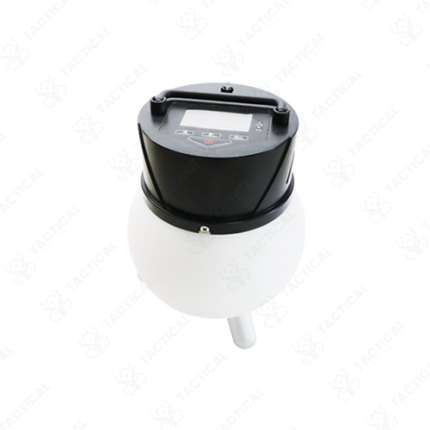
Neutron Detector
Neutron detectors measure neutron radiation fields produced by fissile materials, neutron sources, and nuclear reactions. Nuclear facility radiation protection teams, border security nuclear detection units, military radiological survey formations, and emergency response agencies across Pakistan use these instruments. They provide field neutron dose rate measurement without fixed detector infrastructure at the monitoring location.
Neutron detection uses helium-3 proportional counter tubes, boron-10 lined counters, or lithium-6 scintillator elements. Standard Geiger-Müller tubes show negligible neutron response. This is due to the neutral charge of neutron particles. Helium-3 tubes offer the highest sensitivity for thermal neutron detection. Supply constraints have pushed some designs toward boron-trifluoride and lithium-6 alternatives. Additionally, polyethylene moderator housings between 20 and 50mm thick surround the detector element. These slow fast neutrons to thermal energies before reaching the sensitive volume. Consequently, detection efficiency increases across the full neutron energy range.
Measurement range covers thermal neutron dose rates from 0.1 microsieverts per hour up to 100 millisieverts per hour. Extended range models suit reactor facility environments at higher dose rates. Furthermore, moderated detector energy response follows dose equivalent response from thermal through 10 MeV neutrons. As a result, readings in microsieverts per hour compare directly against dose limit values without energy correction factors.
Display units show dose rate and accumulated dose on digital LCD screens. Audible and visual alarms activate at user-defined threshold levels. Moreover, data logging stores dose rate readings at intervals between 1 second and 1 minute. USB or Bluetooth export transfers data to radiation survey software. Battery operation on AA alkaline cells provides between 500 and 1000 hours of continuous monitoring per set.
Tactical Supply Pakistan supplies neutron detectors to nuclear facility radiation protection teams, border security nuclear detection units, military radiological survey formations, and emergency response agencies requiring dependable field neutron dose rate measurement capability across Pakistan’s nuclear security and radiation protection requirements.
Showing the single result