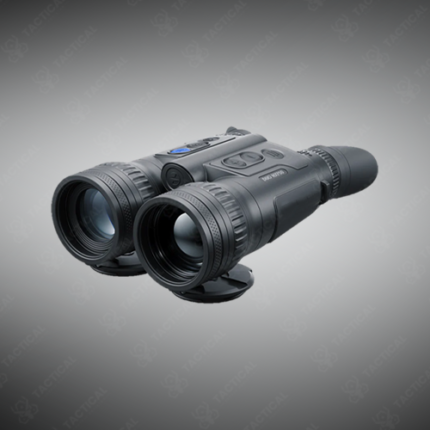
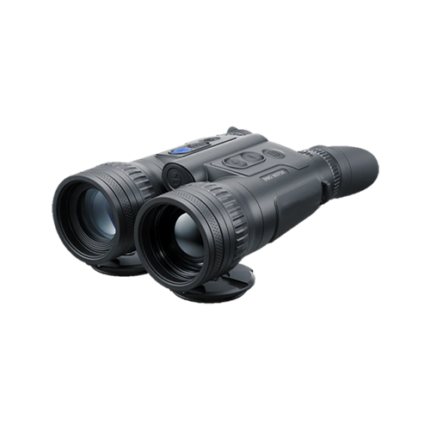
Multispectral Thermal Binoculars
Multispectral thermal binoculars combine visible light optics with thermal infrared imaging into a single dual-tube handheld platform, giving operators simultaneous observation across both spectrums without switching between separate devices. This dual-channel architecture allows direct comparison between visible detail and heat signature data in real time, which proves particularly useful during border patrol, perimeter surveillance, and search operations where target identification requires both spectral inputs together.
The thermal channel typically uses an uncooled vanadium oxide microbolometer detector with resolution options of 320×240 or 640×480 pixels, sensitive across the 8–14 micron long-wave infrared band. Thermal sensitivity, measured as NETD, runs below 50mK on quality units, allowing detection of small temperature differentials between a target and its background. Additionally, the visible channel houses a daylight CMOS sensor with resolution between 2 and 5 megapixels, paired with a low-light performance rating down to 0.001 lux for effective operation during moonless nights.
Optical magnification runs between 4x and 8x on the eyepiece assembly, with some models offering digital zoom up to 4x on top of optical magnification. Furthermore, image fusion modes blend thermal and visible outputs into a single composite view, with adjustable fusion ratio allowing operators to shift weighting between channels based on ambient conditions. Detection range for a standing human target extends to 2000 meters on higher-specification units under standard atmospheric conditions.
Onboard recording stores video and still images to internal memory or removable microSD cards. Moreover, power comes from rechargeable lithium-ion battery packs with runtime between 6 and 10 hours per charge. Housing construction uses magnesium alloy with rubber armoring, carrying IP67 waterproof ratings and MIL-STD-810 shock resistance certification.
Tactical Supply Pakistan supplies multispectral thermal binoculars to border security formations, law enforcement surveillance units, wildlife protection teams, and critical infrastructure protection personnel requiring dependable dual-band observation capability across Pakistan’s diverse operational terrain.
Showing the single result