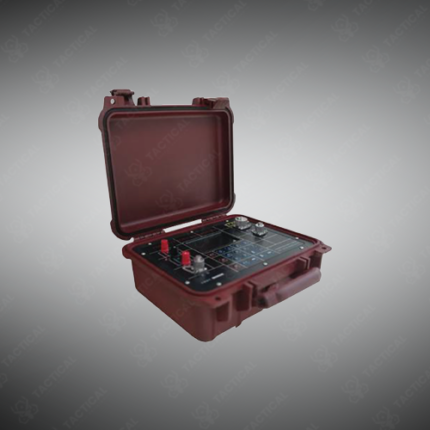
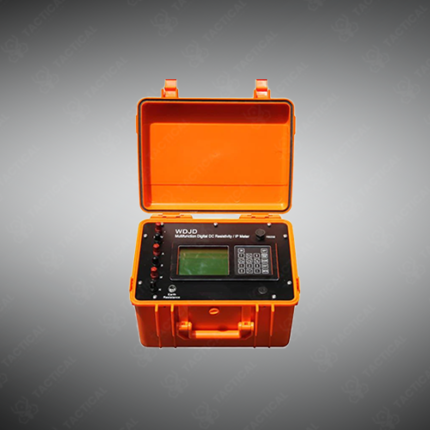
Multifunctional Induced Polarization Instrument
Multifunctional induced polarization (IP) instruments measure the chargeability of subsurface materials — detecting the delayed voltage response that occurs when an injected current is switched off, caused by electrochemical polarization of mineral grains and pore fluids in the ground. This IP response distinguishes disseminated metallic sulfide mineralization, clay zones, and groundwater-bearing formations from surrounding resistive host rocks — making these instruments the primary tool for base metal exploration, groundwater investigation, and environmental site characterization.
IP measurements combine simultaneously with resistivity measurements on modern multifunctional instruments — acquiring both parameters from a single electrode array setup without additional field time. Time-domain IP systems inject a bipolar current waveform and measure the decay of residual voltage after current switch-off at multiple time windows called time gates. Chargeability calculates from the ratio of the decayed voltage integral to the primary voltage — expressed in milliseconds (ms) and indicating the strength of the IP effect. Furthermore, frequency-domain IP systems measure the phase difference between injected current and received voltage across multiple frequencies — producing spectral IP datasets that differentiate clay polarization from metallic sulfide polarization based on their distinct frequency-dependent responses.
The IRIS Instruments Syscal Pro Switch 48 handles 48 electrodes automatically through an internal switching matrix — executing Wenner, Schlumberger, dipole-dipole, and gradient array measurements without manually moving electrodes between readings. This automation reduces field crew requirements and survey time significantly on 2D and 3D resistivity-IP imaging surveys. Output parameters include apparent resistivity in ohm-meters, chargeability in ms, metal factor, and phase in milliradians. Additionally, the GDD IPR-12 time-domain IP receiver pairs with high-power transmitters to achieve signal-to-noise ratios sufficient for deep exploration surveys — reaching investigation depths of 500 meters or beyond with appropriate electrode spreads and injected current levels.
Data inversion software converts field measurements into 2D cross-section and 3D volumetric models of subsurface resistivity and chargeability distribution — guiding drill target prioritization in mineral exploration and aquifer delineation in groundwater surveys.
These instruments serve Pakistan’s mineral exploration contractors targeting copper, gold, and base metal deposits in Balochistan and KPK, groundwater survey programs in Punjab’s agricultural zones, environmental site investigation contractors assessing contaminated industrial land, and university geoscience research departments in Lahore and Karachi conducting subsurface geophysical research programs.
Tactical Supply Pakistan supplies multifunctional induced polarization instruments for mineral exploration, groundwater survey, and environmental site investigation procurement across Pakistan.
Showing all 2 resultsSorted by latest