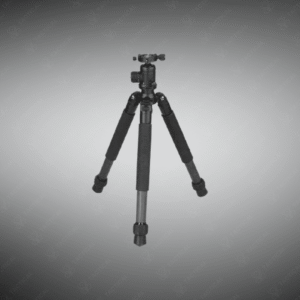
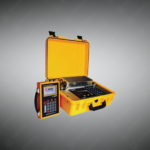
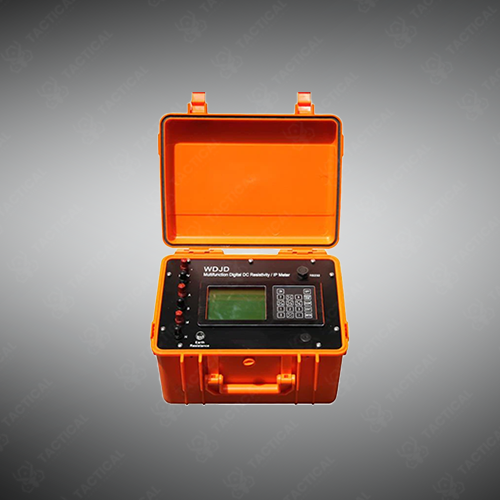
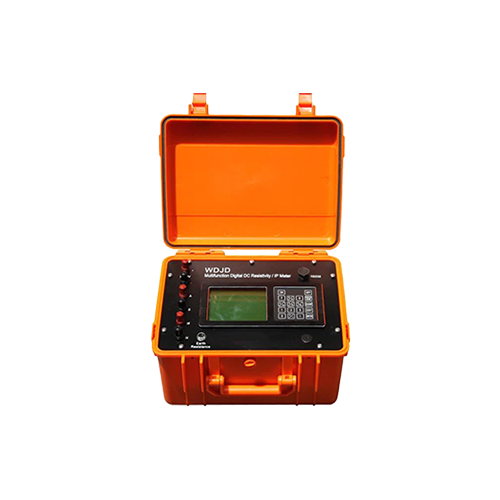
Dual Frequency Induced Polarization Instrument is a DC resistivity and induced polarization survey system designed for groundwater detection, engineering geology, and mineral exploration suggestive investigations.
Key Features:
✔️ Dual-frequency IP and resistivity measurement in one integrated unit
✔️ Multi-parameter acquisition: VP, IP, SP, RO, M, TH and more
✔️ High-accuracy CMOS circuitry for stable, low-noise field data
✔️ Powerful transmission up to 4500 W for deep underground detection
✔️ Strong anti-interference performance (≥80 dB at 50 Hz industrial noise)
✔️ Compact, lightweight design optimized for portable field operations
✔️ Built-in protection against over-voltage, over-current, and power loss
✔️ Supports multi-electrode data processing with third-party software
✔️ Wide application coverage: water resources, mining, dams, railways, bridges
The Dual Frequency Induced Polarization Instrument measures subsurface electrical properties for groundwater detection, mineral exploration, and engineering geology investigations. The WDJD-3A system features CMOS large-scale integrated circuitry delivering ±6V voltage measurements with ±5‰ accuracy when Vp exceeds 10mV. Input impedance reaches 50 megaohms or higher, minimizing signal distortion during resistivity profiling. The unit measures multiple parameters including primary voltage (VP), induced polarization (IP), self-potential (SP), apparent resistivity (RO), polarizability (M), and time constant (TH) through a single survey pass.
Transmitting capability reaches 4500W maximum power with ±900V voltage and ±5A current output. Pulse width adjusts from 1 to 60 seconds with 1:1 duty ratio for controlled subsurface current injection. The system suppresses 50Hz industrial interference by 80dB or greater, maintaining measurement integrity near power transmission lines. Eight D-size batteries power the 7-kilogram unit measuring 310mm x 210mm x 210mm, operating from -10°C to +50°C in 95% relative humidity. Data protection circuits preserve measurements during power interruptions. Earth resistance checking verifies electrode contact quality before survey initiation.
Hydrogeological surveys employ the Dual Frequency Induced Polarization Instrument to map aquifer boundaries and determine groundwater quality through chargeability measurements. Mining exploration teams detect sulfide ore bodies and disseminated mineral deposits based on induced polarization anomalies. Railway engineering projects evaluate foundation stability by identifying weak zones and cavities beneath proposed track alignments. Dam construction surveys assess bedrock integrity, locating fracture systems that threaten water retention.
Tactical Supply Pakistan provides geophysical survey equipment for subsurface investigation and resource exploration projects. The company offers field training on electrode array configurations and data interpretation techniques for resistivity surveys.
How does induced polarization measurement distinguish metallic minerals from non-conductive geological features?
Metallic sulfides and graphite exhibit chargeability when current ceases, releasing stored electrical energy gradually versus instantaneous voltage decay in non-polarizable formations, creating distinctive IP anomalies that identify conductive ore zones.
At Tactical Supply Pakistan, our relationship with you doesn't end after a sale. We are dedicated to making the long-term performance and reliability of our high-quality tactical and supplied equipment. Our commitment is to provide you with seamless support and peace of mind.
Fill out the form, and our team will respond promptly to assist with your product inquiries or order support.
Our 2026 guide ranks the top UK-licensed online casinos for Evolution Gaming live dealer tables, from Lightning Roulette to Crazy Time, with honest bonus advice and payment checks. read our guide to the best Evolution Gaming online casinos UK 2026
Discover the UK casinos that actually pay out quickly in 2026. We compare payout speeds, verification, payment methods, bonuses, and more to help you get your winnings without the wait. read the best fast payout casinos UK
Compare the best first deposit bonus casinos for UK players in 2026 with honest terms, real wagering maths, and no fantasy numbers. compare first deposit bonus casinos
A practical 2026 guide to foreign casinos for UK players. We rank legal offshore options, compare bonuses without fake promises, and show you the real risks. read the full foreign casino guide
Discover the best Greentube online casinos for UK players in 2026. Compare licensed sites, classic slots, RTPs, bonuses, and mobile play. read the best Greentube casinos UK 2026 guide
Compare the best Habanero casinos for UK players in 2026. Licensed sites, bonus types, game selection, payouts, and a full comparison table. read our guide to the best Habanero online casinos UK 2026
We tested UK-licensed casinos for high roller bonuses, VIP programmes, live tables, slots, and withdrawal speed. Read the verified shortlist before you deposit. read the best high roller casino guide
Find the best high volatility slots in the UK for 2026, with top games, legal casinos, RTP data and bonus strategy. Compare sites and play smarter. read our guide to the best high volatility slots UK 2026
Discover the highest RTP slots available to UK players in 2026, with a ranked casino comparison and no-nonsense advice on volatility and bonuses. read our guide to the highest RTP slots in the UK
A practical 2026 guide to the best UK online casinos for IGT slots, covering licensed operators, bonus types, top games, RTP, mobile play and safe gambling. read the best IGT casino guide
WhatsApp us