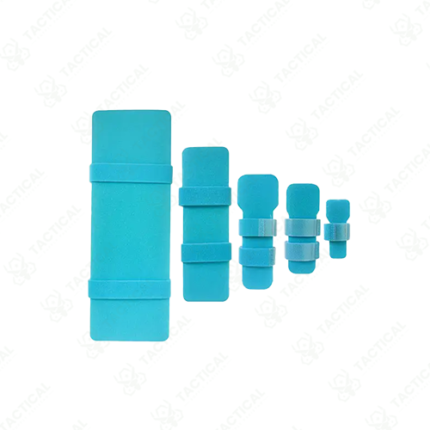
Medical Armboards
Medical armboards are rigid support devices used to immobilize the arm and stabilize the wrist or elbow joint during intravenous catheter placement, blood draws, and other medical procedures requiring a steady, unmoving limb position. They prevent joint flexion that could dislodge an IV catheter, cause infiltration of infused fluids, or compromise blood sample collection by allowing the patient’s arm to bend during or after needle insertion.
Construction materials include rigid plastic, foam-padded plastic, and cardboard-reinforced foam depending on the clinical setting and reuse requirements. Disposable foam-padded armboards are standard in hospital and clinic environments due to infection control protocols requiring single-patient use. Reusable rigid plastic armboards with wipeable surfaces serve lower-risk applications including blood donation centers and outpatient phlebotomy clinics where appropriate cleaning protocols between uses meet infection control standards.
Standard adult armboard dimensions measure approximately 23cm by 9cm for wrist immobilization during IV insertion, with pediatric variants scaled down to 15cm by 6cm for infant and small child applications. Securing methods include adhesive tape applied directly across the board and limb, hook-and-loop straps for reusable boards, or integrated strap channels molded into the board surface. Some armboards incorporate a slight curve or contour matching natural wrist position to reduce patient discomfort during extended IV therapy sessions lasting hours.
In Pakistan, medical armboards are used in hospital emergency departments and inpatient wards for IV therapy stabilization, blood donation centers during donation procedures, military field hospitals and forward medical units administering IV fluids to trauma casualties, and ambulance services stabilizing IV lines during patient transport over rough terrain or extended transit times.
Tactical Supply Pakistan supplies medical armboards for hospitals, blood donation centers, military medical units, and ambulance services requiring reliable limb immobilization during IV therapy and blood collection procedures across Pakistan.
Showing the single result