Measure Magnetic Fields with Precision
Measuring magnetic fields with precision requires instruments capable of resolving field variations at nanoTesla or sub-nanoTesla levels — detecting the subtle anomalies caused by buried objects, geological formations, material properties, and electronic component emissions that standard measurement tools cannot resolve. Precision magnetic field measurement underpins geophysical survey, materials characterization, navigation system calibration, electronic device testing, and fundamental scientific research.
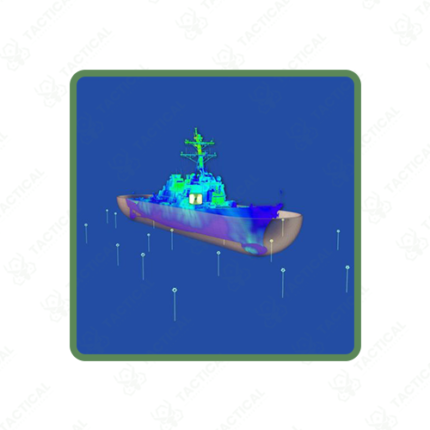
Fluxgate magnetometers deliver three-axis vector field measurement at noise floors as low as 6 pT/√Hz on professional sensors such as the Bartington Mag-03 series. These sensors resolve field components in X, Y, and Z directions simultaneously — used in UAV heading reference calibration, compass testing, magnetic shielding evaluation, and magnetic cleanliness surveys on naval vessels and spacecraft. Furthermore, proton precession magnetometers measure absolute total field values traceable to SI units without calibration drift — providing the reference accuracy needed for base station correction in geophysical survey and magnetic observatory operations.
Overhauser magnetometers deliver continuous total field measurement at 0.01 nT sensitivity and sampling rates up to 5Hz — resolving subtle geological contacts and small buried ferrous targets that fall below the detection threshold of lower-sensitivity instruments. Cesium vapor magnetometers reach sensitivities below 0.004 nT/√Hz — the highest sensitivity available in field-deployable instruments — used in airborne UXO clearance survey, submarine magnetic anomaly detection, and high-resolution mineral exploration. Additionally, SQUID magnetometers cooled to liquid helium temperatures measure field variations at femtoTesla levels — used in magnetoencephalography (MEG) brain imaging, fundamental physics experiments, and strategic-level magnetic anomaly detection programs where conventional sensor technologies lack sufficient resolution.
Calibration facilities using Helmholtz coil systems generate precisely known magnetic fields in three axes for magnetometer calibration — confirming sensor linearity, cross-axis sensitivity, and offset stability across temperature ranges. Magnetically shielded rooms reduce ambient field interference below 1 nT during precision calibration and testing procedures. Furthermore, scalar and vector calibration standards traceable to national measurement institutes ensure measurement traceability across all precision magnetometer applications.
These capabilities serve Pakistan Army navigation and weapons stabilization system calibration programs, Pakistan Navy magnetic signature measurement and degaussing operations, Survey of Pakistan aeromagnetic instrument calibration, NESCOM defense electronics magnetic compatibility testing, and university physics and geophysics research departments in Lahore and Karachi requiring traceable, high-sensitivity magnetic field measurement.
Tactical Supply Pakistan supplies precision magnetic field measurement instruments for geophysical survey, navigation calibration, materials testing, and scientific research procurement across Pakistan.
Showing the single result