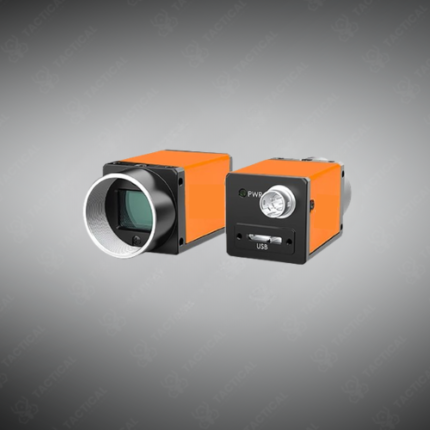
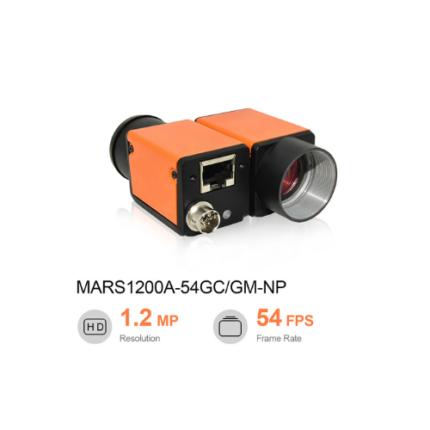
Machine Vision Cameras for Industrial Inspection
Machine Vision Cameras for Industrial Inspection capture and digitize visual data from production lines and manufacturing processes, feeding image information to automated software systems that detect defects, verify assembly correctness, and measure dimensional tolerances without requiring continuous human visual inspection. Quality control managers and production engineers deploy these cameras because automated visual inspection catches defects consistently at line speeds that manual inspection cannot match reliably. Therefore, machine vision adoption directly reduces defective product escape rates while increasing inspection throughput on high-volume production lines.
Industrial inspection cameras use CMOS or CCD sensors with global shutter readout, capturing the entire frame simultaneously to avoid the motion artifacts that rolling shutter sensors introduce when imaging fast-moving items on conveyor systems. Furthermore, sensor resolution selection depends on the smallest defect size the application must detect relative to the camera’s field of view, with higher resolution sensors required for fine feature inspection at wider fields of view. Consequently, integrators calculate required pixel resolution per millimeter of inspected surface before selecting the appropriate camera model for each specific inspection task.
Frame rate requirements scale with production line speed, ranging from standard 30 to 60 frames per second for moderate-speed lines up to several hundred or thousand frames per second for high-speed bottling, packaging, and electronic component placement inspection. Additionally, hardware trigger inputs synchronize image capture precisely with conveyor encoder signals or part-presence sensors, ensuring the camera captures each item at the optimal position within the inspection station.
Lighting integration plays an equally important role as the camera itself, with ring lights, backlights, and structured lighting setups designed to enhance the visibility of specific defect types including surface scratches, color variation, and dimensional irregularities. Moreover, standard interfaces including GigE Vision and USB3 Vision provide reliable data transfer to the connected vision processing computer running the inspection software.
In Pakistan, machine vision cameras for industrial inspection serve textile manufacturing quality control, pharmaceutical packaging verification, automotive parts inspection, and food processing sorting facilities. Tactical Supply Pakistan supplies Machine Vision Cameras for Industrial Inspection across manufacturing and quality control procurement in Pakistan.
Showing the single result