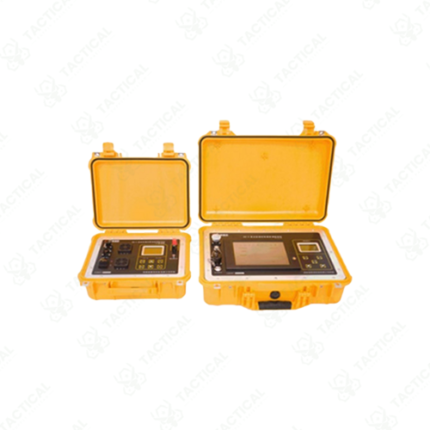
Leakage Detection
Leakage detection covers the continuous or periodic monitoring of pipelines, vessels, storage tanks, building systems, and industrial equipment for unintended fluid or gas loss — identifying breaches before they cause safety incidents, environmental contamination, product loss, or structural damage. Detection systems vary in method, sensitivity, and deployment architecture depending on the medium, infrastructure type, and regulatory requirement.
Acoustic emission monitoring detects the high-frequency stress waves generated when pressurized fluid or gas escapes through a crack, pinhole, or joint defect. Piezoelectric sensors mounted directly on pipe walls or vessel surfaces capture these acoustic signals continuously — alerting operators to active leakage events in real time without requiring flow interruption or manual survey. Furthermore, fiber optic distributed temperature sensing (DTS) systems deploy sensing cables along pipeline routes and detect temperature anomalies caused by product release — covering tens of kilometers of pipeline from a single interrogator unit at spatial resolutions of 1 meter or better.
Negative pressure wave detection monitors the transient pressure drop that propagates upstream and downstream from a sudden release point in a pressurized pipeline. Signal processing algorithms distinguish leak-induced pressure waves from normal operational transients — providing leak location accuracy within 50 to 200 meters on long-distance transmission pipelines. Additionally, flow balance monitoring compares inlet and outlet flow measurements across pipeline segments using ultrasonic or electromagnetic flow meters — flagging imbalances that exceed threshold values as indicators of inter-segment leakage.
Point gas detectors using catalytic bead, electrochemical, NDIR infrared, and photoionization sensors monitor fixed locations in process areas, compressor rooms, tank farms, and utility corridors for gas concentration buildup caused by leaks. These devices output 4–20mA analog signals and digital Modbus or HART communications to safety PLCs and SCADA systems — integrating leakage detection directly into facility safety instrumented systems. Tracer gas injection with surface hydrogen or helium scanning pinpoints exact breach locations on non-metallic underground pipes where acoustic methods produce insufficient signal.
These systems serve Pakistan’s SSGC and SNGPL gas distribution networks, OGDCL and PPL upstream pipeline operators in Sindh and Balochistan, WASA water distribution departments in Lahore and Karachi, industrial tank farm operators at Karachi Port, and chemical processing facilities in Faisalabad requiring continuous leakage monitoring across large, complex infrastructure networks.
Tactical Supply Pakistan supplies leakage detection systems for gas pipeline monitoring, water distribution surveys, tank farm safety, and industrial process leakage management procurement across Pakistan.
Showing the single result