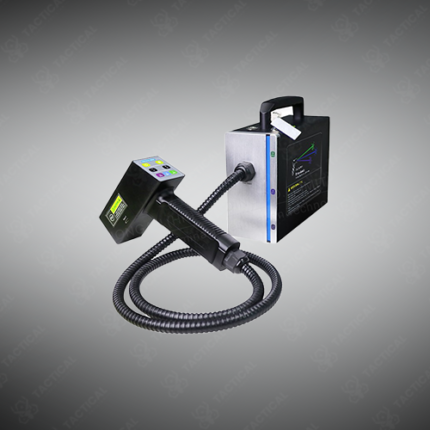
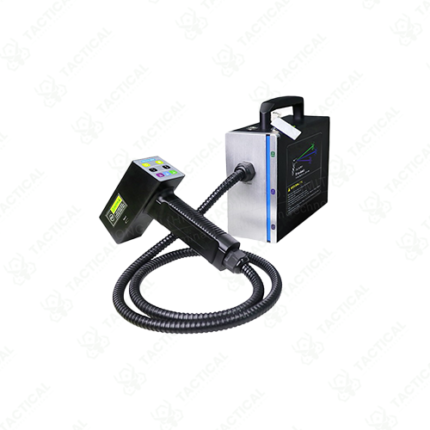
Laser Forensic Evidence Investigation Instrument
Laser forensic evidence investigation instruments use high-intensity laser illumination at specific wavelengths to excite fluorescent compounds in biological traces, latent fingerprints, document alterations, fibers, and chemical residues — making evidence visible that remains completely invisible under white light or conventional UV lamp examination. These instruments form a core component of crime scene examination and laboratory forensic analysis workflows.
Forensic laser light sources emit at selectable wavelengths across the visible and near-infrared spectrum. Common excitation wavelengths include 415nm violet for bloodstain enhancement, 445nm and 473nm blue for latent fingerprint fluorescence on multi-colored or patterned backgrounds, 515nm and 532nm green for body fluid detection and fiber examination, and 590nm to 638nm orange-red for document examination and questioned ink analysis. Each wavelength targets different fluorophore responses in the evidence — operators switch between wavelengths systematically during scene examination to cover all evidence categories. Furthermore, barrier filters fitted to examination goggles or camera lenses block the excitation wavelength while transmitting the longer-wavelength fluorescence emission — producing high-contrast images of trace evidence against dark backgrounds.
The Coherent OBIS laser system and similar multi-line forensic laser platforms deliver switchable output across four to six wavelengths from a single rack-mounted unit — eliminating the need for separate single-wavelength sources for each excitation band. Portable battery-operated forensic laser systems such as the Sirchie RUVIS LS derivatives deliver field-deployable single or dual wavelength output in housings weighing under 2kg, with runtime of 4–6 hours per charge.
Additionally, laser-based fingerprint development enhances latent prints on surfaces that powder and chemical development methods cannot process — including wet surfaces, highly textured substrates, and items that have been submerged. Laser examination of questioned documents reveals erasures, ink overwriting, and paper fiber disturbance at resolutions surpassing conventional oblique light examination.
These instruments serve Pakistan’s Federal Investigation Agency (FIA) forensic laboratories, Punjab Forensic Science Agency (PFSA), police crime scene units across Karachi, Lahore, and Islamabad, and Counter Terrorism Department (CTD) evidence processing teams requiring advanced optical evidence development beyond conventional white light examination.
Tactical Supply Pakistan supplies laser forensic evidence investigation instruments for crime scene examination, fingerprint development, and questioned document analysis procurement across Pakistan.
Showing the single result