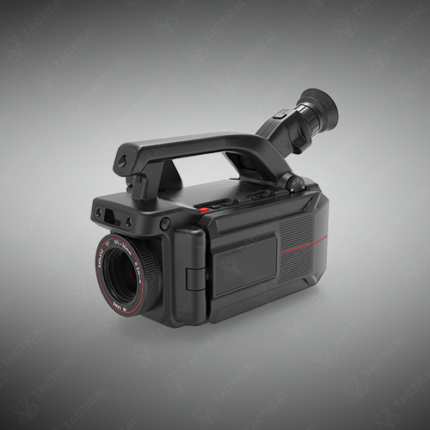
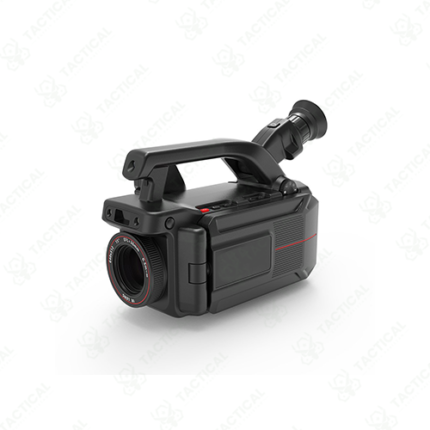
Infrared Gas Detection
Description:
Infrared gas detection uses the absorption of infrared light at specific wavelengths to identify and measure the concentration of target gases in ambient air. Each gas molecule absorbs infrared radiation at characteristic wavelengths — methane absorbs strongly at 3.3 µm, carbon dioxide at 4.26 µm, and propane at 3.4 µm. Infrared detectors exploit this property to identify gas type and measure concentration without consuming the gas sample or degrading the sensor through chemical contact — giving these systems significantly longer service life than catalytic bead alternatives.
Non-Dispersive Infrared (NDIR) sensors form the core of most industrial fixed-point infrared gas detectors. A broadband IR light source emits across a range of wavelengths. An optical bandpass filter isolates the target gas absorption wavelength before the detector. When target gas enters the measurement cell, it absorbs IR energy at that wavelength — the detector records the drop in transmission and converts it to a gas concentration reading in parts per million (ppm) or percent lower explosive limit (%LEL). Furthermore, dual-wavelength NDIR designs use a reference wavelength unaffected by the target gas to compensate for light source aging, contamination, and temperature drift — maintaining calibration stability over multi-year service intervals without frequent recalibration.
Fixed infrared gas detectors mount in process areas, compressor rooms, gas turbine enclosures, and pipeline valve stations. They output 4–20mA analog signals and Modbus RTU or HART digital signals for integration with safety PLCs, distributed control systems (DCS), and building management systems. Portable infrared gas analyzers deliver ppm-level methane, CO₂, and hydrocarbon readings in handheld units weighing under 500 grams — suited for confined space entry surveys and leak pinpointing. Additionally, open-path infrared detectors project a beam across distances of 5 to 200 meters, integrating gas concentration across the full beam path to detect diffuse releases invisible to point detectors.
These systems serve Pakistan’s gas distribution networks operated by SSGC and SNGPL, OGDCL and PPL upstream gas processing facilities in Sindh and Balochistan, power plant gas turbine enclosures across Punjab, and fertilizer manufacturing plants in Multan and Lahore requiring continuous hydrocarbon leak detection across large process areas.
Tactical Supply Pakistan supplies infrared gas detection systems for hydrocarbon leak monitoring, confined space safety, and industrial process area gas detection procurement across Pakistan.
Showing the single result