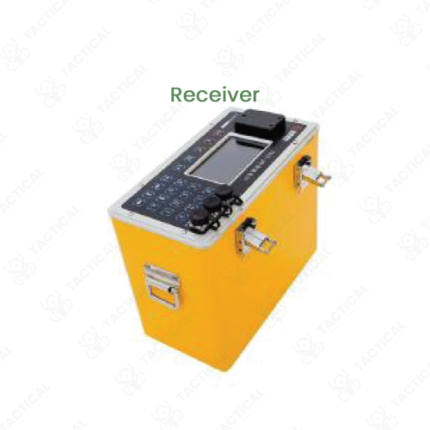
High‐Frequency Induced Polarization Measurements
High-Frequency Induced Polarization Measurements are geophysical electrical characterization procedures that apply alternating current to the ground at frequencies above the conventional IP range — typically from 10Hz to 10,000Hz or higher — and measure the frequency-dependent complex impedance response of subsurface materials to extract polarization parameters that identify mineralization, clay content, pore fluid chemistry, and grain surface electrochemical properties at greater spectral detail than low-frequency IP surveys provide.
Conventional induced polarization surveys operate at a single low frequency or in the time domain, capturing a single chargeability value per measurement point. High-frequency IP measurements extend the analysis into spectral induced polarization (SIP) territory, recording both resistivity magnitude and phase angle across a defined frequency spectrum. This spectral response characterizes the Cole-Cole relaxation parameters — chargeability, time constant, and frequency exponent — that fingerprint different polarization mechanisms including membrane polarization in clay-rich sediments and electrode polarization at metallic mineral grain surfaces.
The measurement system injects sinusoidal current into the ground through stainless steel or non-polarizing electrodes in standard dipole-dipole, Wenner, or Schlumberger array configurations. A lock-in amplifier or frequency-domain data acquisition unit measures the voltage response at the potential electrode pair, extracting amplitude and phase at each applied frequency with millidegree phase resolution. Electrode contact resistance and cable capacitance effects require careful correction at frequencies above 1,000Hz where parasitic coupling between current and voltage circuits introduces measurement artifacts that mask the true ground phase response.
Data inversion produces 2D or 3D spectral IP models showing the spatial distribution of Cole-Cole parameters across the survey volume, with anomaly patterns distinguishing disseminated sulfide mineralization from graphite, clay alteration zones, and barren resistivity anomalies in mineral exploration targets.
In Pakistan, high-frequency IP measurements support porphyry copper and gold exploration programs in Balochistan and Khyber Pakhtunkhwa, groundwater aquifer clay content characterization, environmental contamination plume mapping, and university geophysics research programs studying subsurface electrochemical processes.
Tactical Supply Pakistan supplies high-frequency induced polarization measurement systems and electrode array hardware for mineral exploration and geophysical survey procurement across Pakistan.
Showing the single result