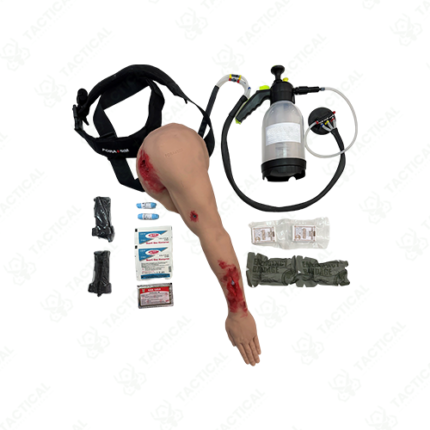
Training Arms
Training arms are anatomical practice models replicating the human upper extremity for clinical skills development in venipuncture, intravenous cannulation, blood draw, and injection technique training. Medical colleges, nursing schools, paramedic programs, and military medical training centers across Pakistan use training arms to give learners repeated needle insertion practice in a controlled environment before performing vascular access procedures on actual patients.
The model body uses soft silicone or polyurethane skin material that simulates the tactile resistance and compression response of human skin during needle penetration. Subcutaneous vein channels beneath the skin surface fill with artificial blood fluid, producing a visible flashback in the needle hub when the needle tip correctly enters the simulated vessel lumen. Vein locations follow standard anatomical positions at the antecubital fossa, including median cubital, cephalic, and basilic vein sites. Vein depth runs between 3mm and 8mm below the skin surface. Additionally, multi-vein models include deep, superficial, and rolling vein variants within the same arm model. These expose learners to the full range of access difficulty levels encountered in clinical practice before performing procedures on patients.
Replaceable skin pads and vein tube refill kits extend model service life across multiple training sessions. A single skin pad withstands between 200 and 500 needle insertions before visible surface degradation requires replacement. Artificial blood fluid refills restore the flashback simulation function without replacing the entire arm assembly. Furthermore, some training arm models include arterial pulse simulation through a small pump system that creates a palpable pulse at the radial and brachial artery positions, adding arterial line placement and pulse assessment practice to the standard venipuncture training capability.
Table clamp or freestanding base mounting positions the arm at a comfortable working height during training exercises. Fluid reservoir connection on extended training session models provides continuous artificial blood supply between needle insertions. Moreover, the training arm withstands standard medical disinfection with quaternary ammonium and isopropyl alcohol cleaning solutions between training sessions, maintaining surface hygiene across shared use in busy clinical skills laboratory environments.
Tactical Supply Pakistan supplies training arms to medical and nursing colleges, paramedic training institutes, military medical training centers, and hospital clinical skills laboratories requiring durable anatomical venipuncture and vascular access practice capability across healthcare professional training programs throughout Pakistan.
Showing the single result