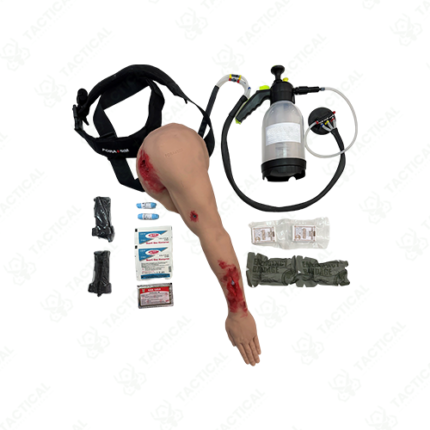
Training Arm Model
Training arm models are anatomical replica limb devices used to teach and practice clinical procedures involving the upper extremity, including venipuncture, intravenous cannulation, blood draw, and intramuscular injection techniques. Medical training institutions, nursing colleges, paramedic programs, and military medical training units across Pakistan use training arm models to allow learners to develop needle insertion skills and vascular access technique before performing procedures on actual patients.
The model replicates the external anatomy of an adult forearm and antecubital fossa in skin-toned silicone or soft polyurethane material that simulates the tactile resistance of human skin during needle penetration. Subcutaneous vein channels run beneath the simulated skin surface, filled with artificial blood fluid that produces a visible flashback in the needle hub when the needle tip enters the vein correctly. Vein locations follow standard anatomical positions including the median cubital, cephalic, and basilic veins at the antecubital fossa, matching the sites most commonly used for clinical blood draw and intravenous access procedures. Additionally, vein channel depth runs between 3mm and 8mm below the simulated skin surface, replicating the typical depth variation encountered across different patient body types in clinical practice.
Replacement vein tubes and artificial blood fluid refills extend the useful life of the training model beyond the initial kit contents, allowing multiple training sessions before the simulated skin and vessel components require replacement. Skin pad replacement kits allow the outer skin layer to replace independently from the internal vein structure, reducing consumable cost per training session compared to replacing the full arm assembly after each use. Furthermore, advanced training arm models include vein variations simulating difficult access scenarios including deep veins, rolling veins, and fragile vein walls, exposing learners to challenging cannulation situations in a safe training environment before encountering them in clinical practice.
Model mounting uses a table clamp or freestanding base that positions the arm at a comfortable working height for the practitioner during training. Fluid reservoir connection allows continuous artificial blood supply during extended training sessions without refilling between each needle insertion attempt. Moreover, the model withstands hundreds of needle insertions per skin pad before visible surface degradation requires replacement, supporting high-volume training throughput at busy nursing and paramedic education programs.
Tactical Supply Pakistan supplies training arm models to medical and nursing colleges, paramedic training programs, military medical training centers, and hospital clinical skills laboratories requiring anatomically realistic venipuncture and intravenous cannulation practice capability across healthcare professional training programs throughout Pakistan.
Showing the single result