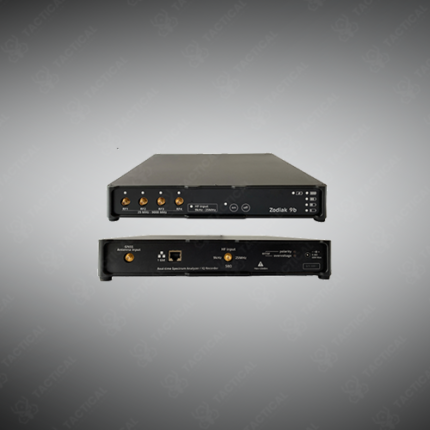
RF Signal Analyzers
An RF signal analyzer measures radio frequency signals across a set frequency range, showing signal strength, frequency, and modulation on a screen. Coverage typically spans from 9kHz up to 6GHz or higher on advanced models, covering everything from AM radio bands to Wi-Fi and cellular frequencies. The display shows a spectrum graph, with peaks representing active signals at different frequencies. Handheld units weigh 1 to 3 kilograms, with battery life running 4 to 8 hours per charge for field use away from mains power.
Resolution bandwidth settings let the operator zoom into a narrow frequency range to separate signals sitting close together, useful when checking for interference between nearby transmitters. Some models include a built-in antenna, while others accept external antennas through an SMA connector for better range or directional scanning. Data storage saves scan results internally or exports over USB for later review on a computer, building a record of frequency activity at a site over time.
Telecom companies use RF signal analyzers to check tower output and confirm coverage meets license requirements set by the regulator. Broadcast engineers use them to verify transmitter frequency and power stay within assigned limits. Security teams use signal analyzers to sweep sensitive rooms for unauthorized transmitters, checking for signals that shouldn’t be present during a scheduled inspection. Amateur radio operators and technical training institutes also use these analyzers for frequency coordination and hands-on RF measurement training.
Tactical Supply Pakistan supplies RF signal analyzers to telecom firms, broadcast engineers, and security inspection teams across Pakistan. Units come with a carry case, external antenna option, and software for exporting scan data to a computer for detailed review.
Showing the single result