Raman Laser
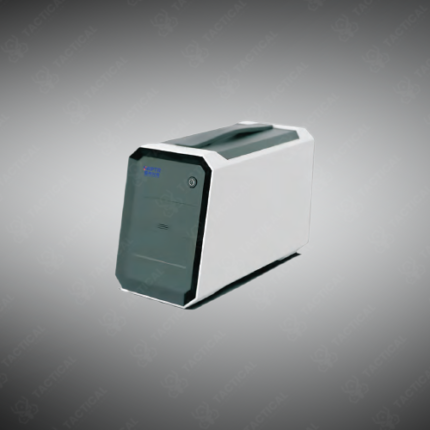
Raman lasers are the excitation light sources used in Raman spectroscopy instruments, producing a highly stable, narrow-linewidth output at a specific wavelength that drives the inelastic scattering process responsible for generating the molecular fingerprint spectra used in chemical identification. The laser wavelength selection determines which sample types are measurable, what fluorescence interference level the measurement encounters, and which detector technology the spectrometer requires to capture the resulting Raman scatter signal efficiently.
Common Raman laser wavelengths cover 532nm green, 633nm or 638nm red, 785nm near-infrared, and 1064nm near-infrared output. The 532nm green laser produces strong Raman scatter due to the wavelength-to-the-fourth-power relationship between excitation wavelength and Raman signal intensity, but causes fluorescence in many organic samples including biological materials, colored narcotics, and aged forensic evidence. The 785nm near-infrared laser balances adequate signal intensity with significantly reduced fluorescence from most organic sample matrices, making it the most widely used wavelength in portable security and forensic Raman instruments. Additionally, the 1064nm laser produces the lowest fluorescence background across nearly all sample types, supporting measurement of highly fluorescent samples where 785nm excitation still causes unacceptable background interference, at the cost of lower signal intensity requiring longer acquisition times or more sensitive detector arrays.
Linewidth specification on Raman lasers runs below 0.1nm full width at half maximum on quality diode-pumped solid-state and distributed feedback diode laser designs. Narrow linewidth matters because broader laser lines degrade the spectral resolution of the measured Raman spectrum, reducing the system’s ability to distinguish between closely related chemical compounds. Furthermore, wavelength stability over temperature and operating time affects wavenumber calibration accuracy, with temperature-stabilized laser designs using thermoelectric coolers on the laser diode junction maintaining wavelength drift below 0.01nm per degree Celsius across the operating temperature range.
Output power on Raman excitation lasers runs between 50mW and 500mW depending on the application, with higher powers improving signal intensity but increasing the risk of sample damage on sensitive biological and pharmaceutical materials. Moreover, laser safety classification runs at Class 3B or Class 4 depending on output power, requiring appropriate interlock and enclosure designs in instrument integration to meet laser safety requirements during operation.
Tactical Supply Pakistan supplies Raman laser sources to spectroscopy instrument developers, forensic laboratory equipment integrators, pharmaceutical analytical instrument manufacturers, and security technology research programs requiring stable, narrow-linewidth laser excitation sources for Raman spectroscopy system development and instrument upgrade applications across Pakistan.
Showing the single result