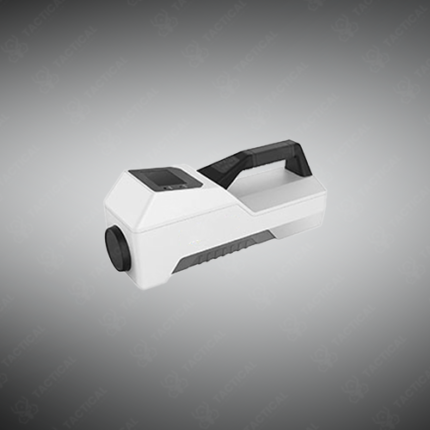
Handheld Nuclide Recognition Instrument
Handheld nuclide recognition instruments detect gamma and neutron radiation while simultaneously identifying the specific radioactive isotope producing the detected signal, going beyond simple dose rate measurement to tell the operator exactly which radionuclide is present in the area. Border security officers, nuclear facility radiation protection teams, military radiological survey personnel, and emergency responders across Pakistan use these instruments to distinguish between naturally occurring radioactive materials, legitimate industrial and medical isotopes, and isotopes associated with nuclear weapons or radiological dispersal devices.
The gamma detection element uses a sodium iodide, cesium iodide, or lanthanum bromide scintillation crystal coupled to a photomultiplier tube or silicon photomultiplier, producing an energy spectrum of detected gamma photons rather than a simple count rate. Crystal size runs between 1.5 x 1.5 inches and 3 x 3 inches on handheld instruments, with larger crystals improving detection sensitivity and spectral resolution at the cost of increased instrument weight. Additionally, energy resolution on lanthanum bromide detectors runs below 3% at 662 keV, compared to 7 to 8% for sodium iodide, providing better isotope discrimination capability in mixed-source environments where multiple radionuclides produce overlapping spectral peaks requiring deconvolution for accurate identification.
Nuclide identification algorithms compare the measured spectrum against onboard libraries covering medical isotopes, industrial sources, naturally occurring radioactive materials, and special nuclear materials associated with weapons programs. Identification results display within 5 to 30 seconds of adequate count accumulation, showing nuclide name, activity estimate, and threat category classification. Furthermore, NORM suppression algorithms identify and subtract naturally occurring background contributions from thorium, uranium, and potassium-40 before identification processing, reducing false alarm rates in areas with elevated natural background common in Pakistan’s granite-bearing northern geological zones.
Neutron detection uses helium-3 or lithium-6 based detector elements sensitive to neutron radiation emitted by fissile materials, with neutron detection triggering an immediate high-priority alarm given the limited legitimate sources of neutron radiation outside nuclear facilities. Moreover, GPS logging with each detection event, Bluetooth data transfer to field command tablets, and encrypted data storage support chain-of-custody documentation for law enforcement and regulatory response actions following a confirmed detection event.
Tactical Supply Pakistan supplies handheld nuclide recognition instruments to border security nuclear detection units, Pakistan Nuclear Regulatory Authority inspection teams, military radiological survey formations, and emergency response agencies requiring isotope-specific radiation identification capability across Pakistan’s nuclear security and radiation protection requirements.
Showing the single result